The company knew. The person deciding did not.
Two salespeople quote the same job at different rates. A signed ticket takes a week to reach the office. Gear the company owns gets rented again because nobody knows which yard it is in.
Twelve years in crane service, time as a general contractor, and an infantry Marine's idea of readiness went into Ribbiot, the first AI-native operating system for the trades where no two jobs go out the same way.
The fog of operations is what a company works in when decisions are made without clear, current, connected truth about the job. The name comes from the fog of war: capable people, deciding on time, without the full picture.
Two salespeople quote the same job at different rates. A signed ticket takes a week to reach the office. Gear the company owns gets rented again because nobody knows which yard it is in.
Every job is a new combination of equipment, crew, certifications, permits, and site conditions. Paper, the whiteboard, spreadsheets, and point tools each hold one piece of it. So the job is retyped at every handoff, and the cost collects in the seams.
Before the work, nobody can say for sure that the equipment, the crew, and the documents are ready. While it runs, the office knows what the field had a minute to report. At closeout, billing waits on paper.
We worked in it for years. Nobody around us was careless, and the same problems came back every week, tolerated as the cost of doing business. Ribbiot exists to remove the fog.
To simplify the complexities of physical operations to deliver visibility and foster sustainable growth.
To be the default management platform for physical operations.
 One record
To simplify the complexities of physical operations to deliver visibility and foster sustainable growth.
The work will always be hard. Engineered lifts, field logistics, compliance, and customer commitments demand expertise, and no software changes that. What Ribbiot simplifies is the system around the work. When the quote, the schedule, the field record, and the invoice are one record, people see what is true, and a company can take on more work without multiplying confusion, risk, or overhead.
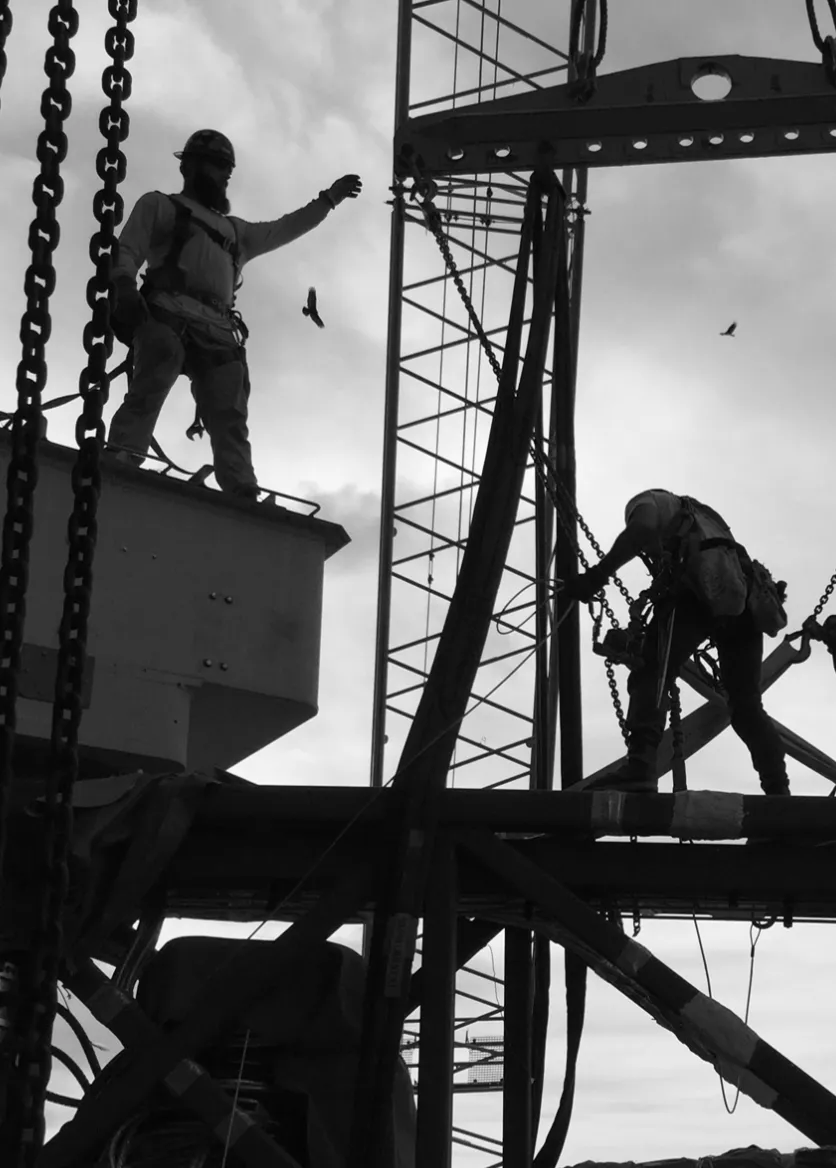
To be the default management platform for physical operations.
Default means the first thing a company in these trades reaches for when it sells, plans, sends, and bills a job, the way accounting software is the default for the books. Many of these companies run on paper, whiteboards, and one point tool for each stage of the job. The vision is the day one record is the standard and the fog is the exception.

These four values guide every decision we make. We hire for them and hold each other to them.
We listen before we prescribe. The customer is never the problem, and every workaround we find in a yard or a dispatch office is someone doing their best inside a broken system. We never talk down to the field.
We expect the plan to change. Jobs move, equipment breaks, and crews shift by the hour, so we build for the way the work behaves and run the company the same way. When a situation falls outside the plan, we huddle, weigh the risk, and decide.
We are members of this industry. We spend our time in yards, in dispatch offices, and in the trade's own rooms, and we argue long over product decisions because this work deserves better than what it has been sold. The people doing it can tell who cares.
We chose hard ground on purpose. Engineered quotes, equipment assembled for every job, safety-critical inspections, and incumbents dug in for decades do not give on the first try. We take hard problems head-on and come back after being told no.
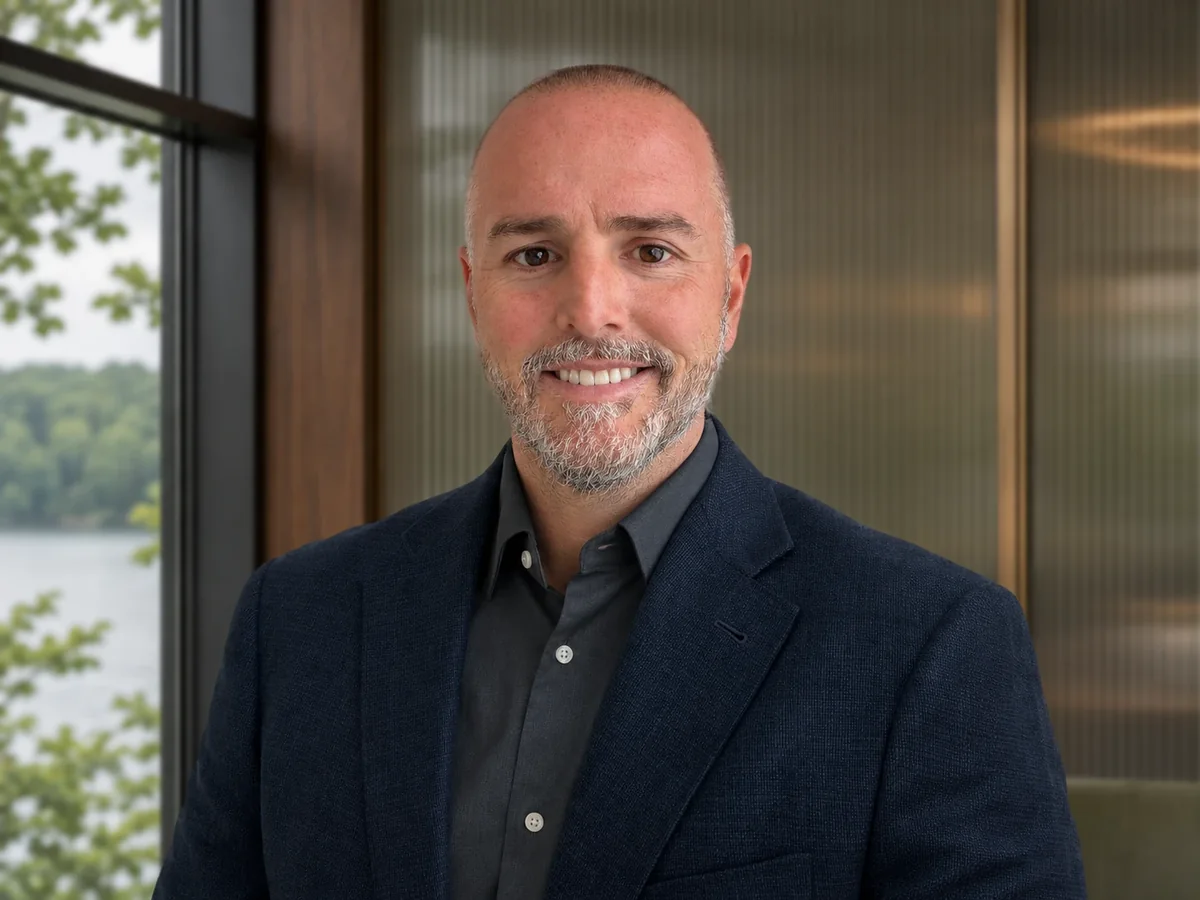
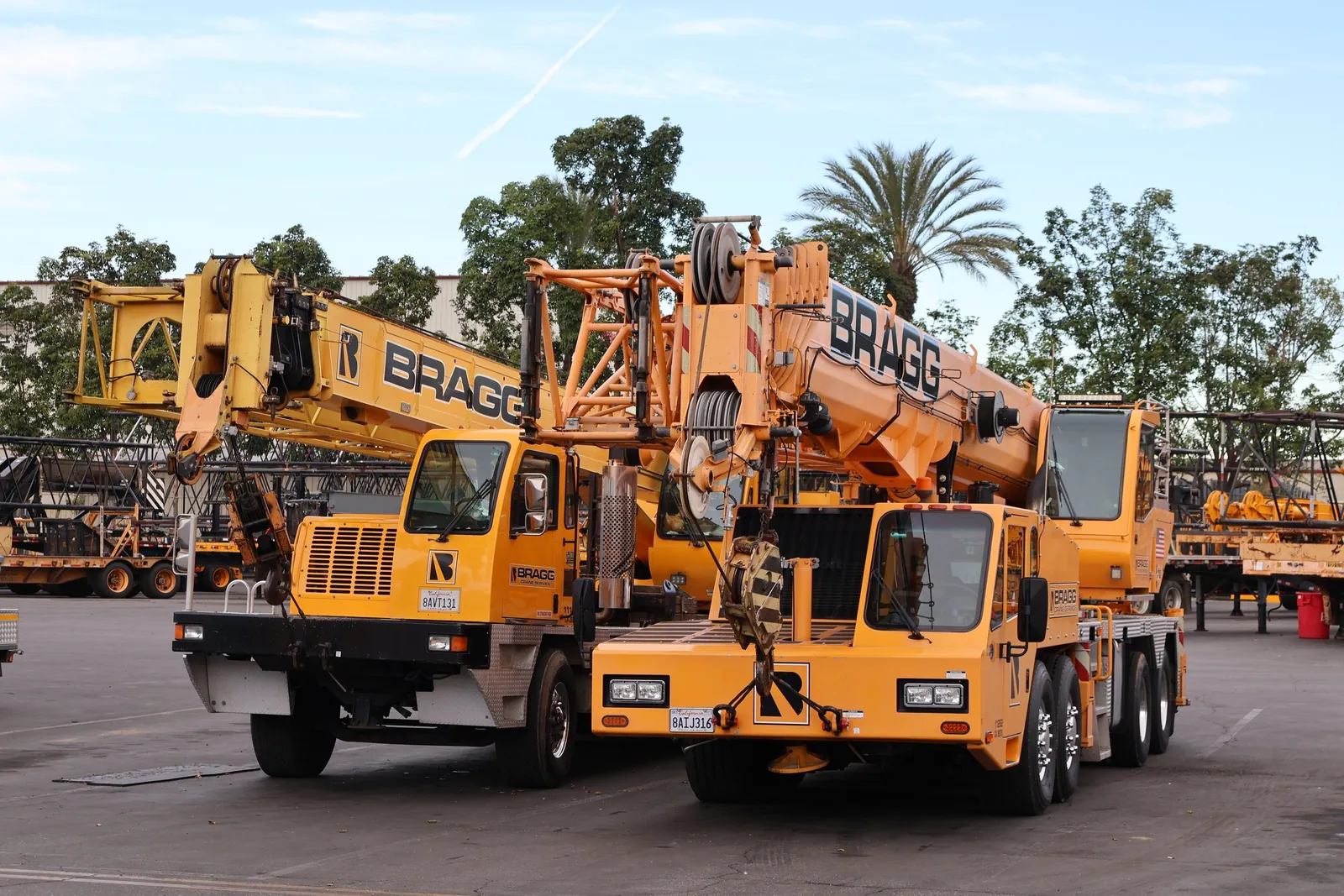
Joe Frigo is a mechanical engineer who has worked on both sides of the job. At MATT Construction, a general contractor, he sat on the customer's side of the trades Ribbiot serves. He then spent twelve years at Bragg Companies, in crane service and heavy transport, first in engineering and then as founder of its technology and innovation group. Before that he served as an active duty infantry Marine, where readiness is the whole job and the fog is the enemy you plan against.
For about six of those years his job was to get technology to speak the trade's language. He found a Frankenstack, one tool for each stage of the job taped together by the people working across them, and vendors who told the company to change how it operated so their software would work. Nobody was building for the trade's own problems, and the trade had come to accept them as the cost of doing business.
He founded Ribbiot in 2021 because he would not. The name joins ribbit, the frog's call, with IoT, the internet of things. The frog comes from his service, where it is the symbol of the amphibious units at home in the air, on land, and at sea.
Ribbiot is built by people from the trades and people from software. Research and development, hardware, and implementation each have an experienced lead, and the team spends its time in yards and dispatch offices as well as in the code, because the work deserves better than what this market has been sold.

JD manages all of research and development at Ribbiot: engineering, hardware, product, and design. He coordinates a large team across the four, so that what each group builds ships as one product on one roadmap. He joined in January 2023 as Vice President of Product and carries the product side of Ribbiot's strategic accounts. Before Ribbiot he shipped products at Under Armour, alongside Andrew Harrison and Kyle Struthers, and at Owlet, alongside Kyle and Branden Sheffield.
Vice President of Product

Andrew leads a large engineering team that works on several projects at once. The projects can sit miles apart, from quoting to payroll, and every one of them has to work in the same record across the whole operation. Under his lead the team keeps its roadmap deliverables on track while it ships new features that work with everything already live. He joined in October 2023 as a staff software engineer and stepped into engineering leadership. Before Ribbiot he held staff-level engineering roles at Literati and at Under Armour Connected Fitness, where he worked with JD Martin and Kyle Struthers, with earlier platform work at Return Path and Liberty Mutual.
Engineering Director
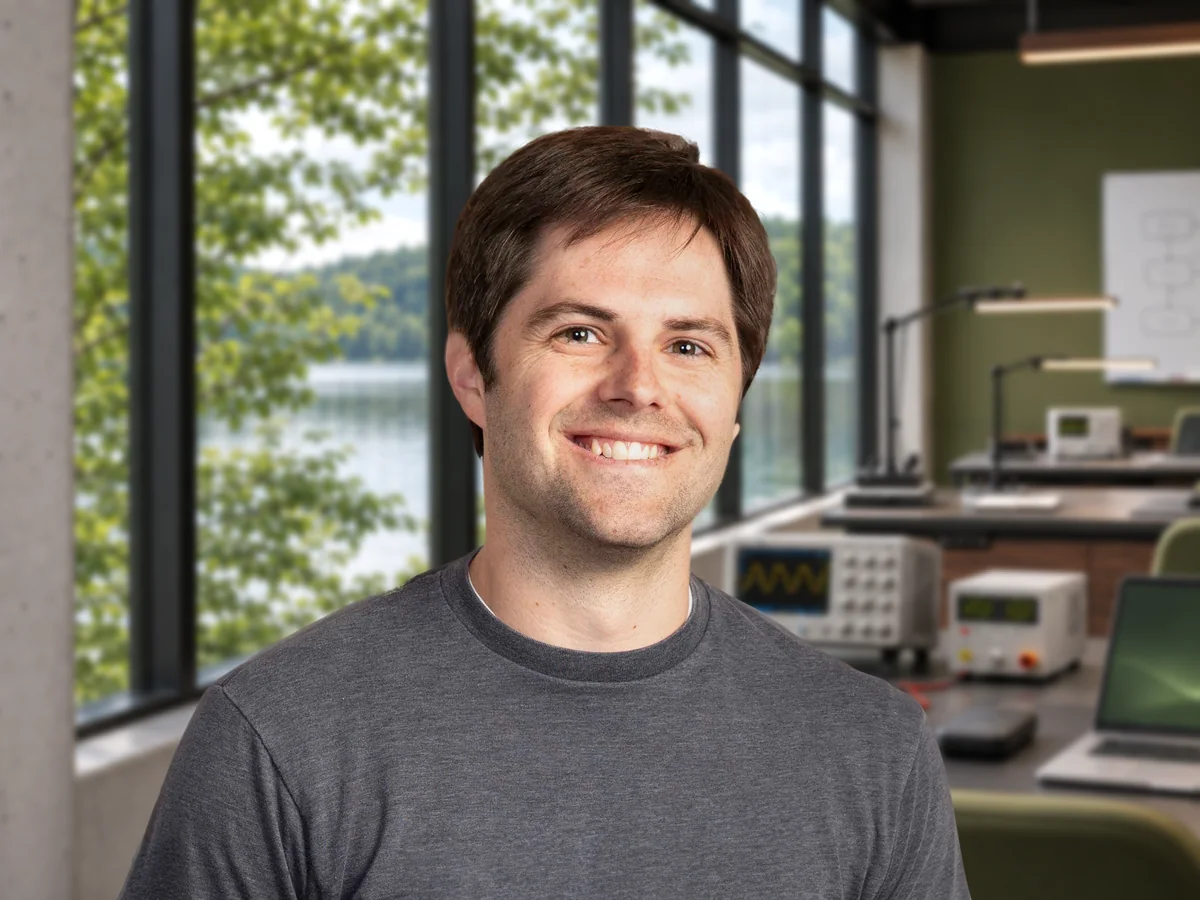
Branden designed Pod and Portal and owns Ribbiot's hardware roadmap. The devices are built for a working yard: sealed industrial housings, a Pod battery a worker changes in the field with a push and a twist, and a tap from a phone that opens the equipment's documents. He also owns the mounting methods that keep a tracker on steel, chain, and pipe, and the connection that brings a customer's existing telematics into the same equipment record. Before Ribbiot he worked at Owlet with JD Martin and Kyle Struthers.
Hardware Director

Blakeslee owns implementation, from kickoff through a customer's first workflow and the value it produces. She brings nine years of implementing vertical software for the food service industry and three years inside a crane and rigging shop, where she sat on the customer's side of the desk. She joined in July 2026 as the first person at Ribbiot dedicated to the work after the sale, which the product team carried before her.
Implementation Manager

Kyle keeps the roadmap and the engineering work behind it in step. He gathers feedback from customers, sets priorities on the roadmap, and manages projects through engineering to release. Before Ribbiot he held product management roles at Under Armour, where he worked with JD Martin and Andrew Harrison, and at Owlet, where he worked with JD and Branden Sheffield. A biomedical engineer by training, he joined in February 2023.
Principal Product Manager

Ryan has led product design at Ribbiot since January 2023, for software that has to work at a dispatch desk and on a phone in the field. He runs the user research and testing that define each feature before it is built. Before Ribbiot he set up and ran the design organization at Bright Machines, which makes software for automated manufacturing, and directed product design at HTC Vive's incubation lab. Earlier he joined Fan TV as a software engineer and went on to start its product design team. He has also helped create products for IDEO, Google, and PNC Bank.
Director of Product Design
Ribbiot answers to three people. A founder who spent twelve years inside the trade. A co-founder of the company that became ZoomInfo. And the chief executive brought in to turn around the joint venture of five aerospace and defense manufacturers.
Founder and Chief Executive Officer
Joe is the director who has done the work Ribbiot serves. He spent twelve years inside one of the trade's companies, first as an engineer and then as founder of its technology group, and that company invested in Ribbiot before a line of code was written. He earned a bachelor's degree in mechanical engineering at the University of Southern California and, after several years of work, an MBA there. He served as an active duty infantry Marine. He founded Ribbiot in 2021 and leads it as Chief Executive Officer.
Director & Investor
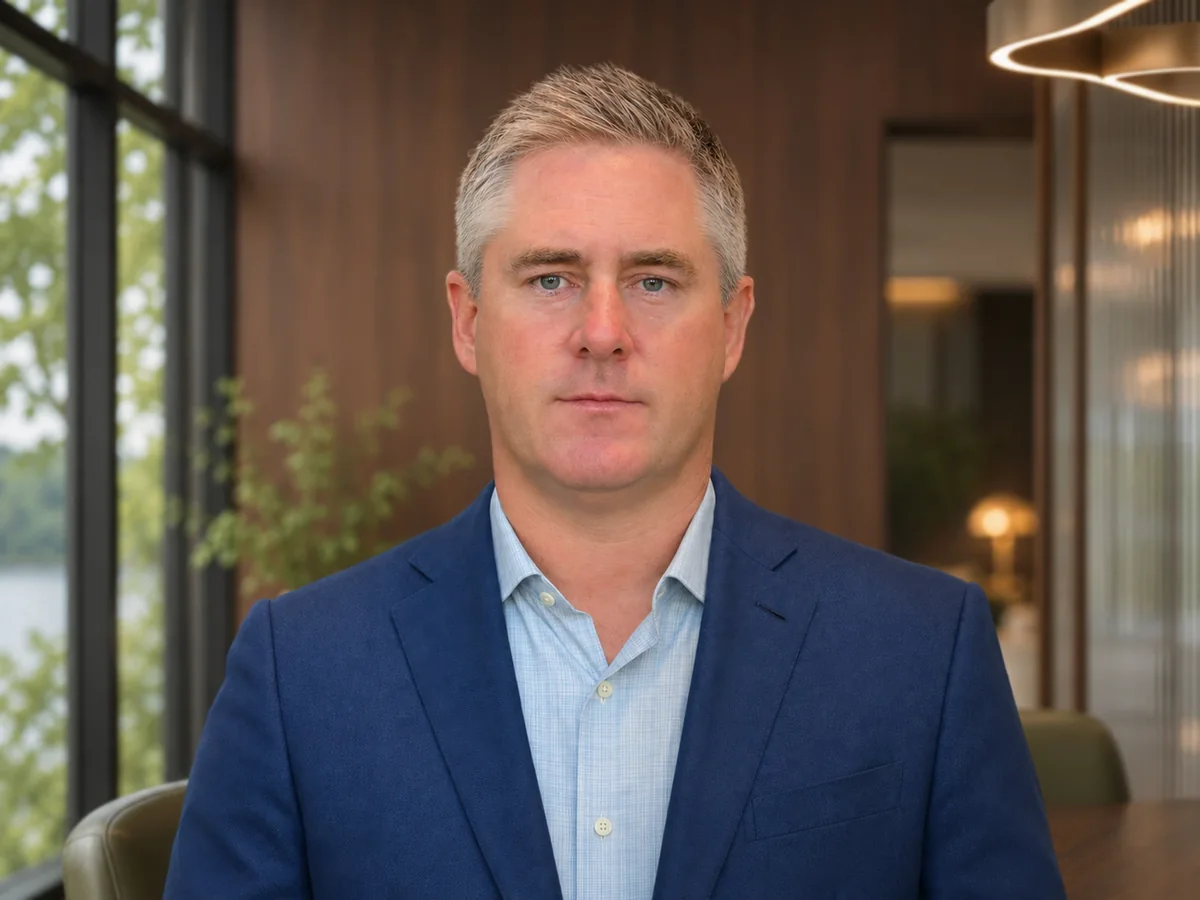
Kirk has already built the kind of company Ribbiot is building. He co-founded DiscoverOrg with Henry Schuck in 2007 and, as its Chief Operations Officer, ran the research and operations behind the data its customers paid for. The two built it with no venture capital to more than a thousand customers before they took an outside investor. The company went on to buy Zoom Information, take the ZoomInfo name, and list on Nasdaq in June 2020 as a billion-dollar public company. Kirk backed Ribbiot at the Series Seed and has continued to invest as the company has hit its milestones. He has also invested in and taken a board seat at several other companies, which gives Ribbiot's board a director who has been both the founder and the investor. Throughout Ribbiot's growth he has offered his advice and mentorship, drawn from the practical experience of building his own company.

Director
Bill has spent his career where large buyers meet the companies that supply them. He ran the aerospace and defense business at FreeMarkets, a tech company bought by Ariba. He then co-founded Tenzing Consulting, advising clients on performance improvement across operations, procurement, and supply chain. He was then brought in by the board of Exostar, the supply chain and security platform owned by BAE Systems, Boeing, Lockheed Martin, Raytheon, and Rolls-Royce, to turn it around. As its President and Chief Executive Officer he changed the strategy of the business, growing over 60 percent the first year and making money for the first time. Exostar was subsequently bought by Thoma Bravo. He also co-founded C2FO, the working capital marketplace. Ribbiot's customers answer to complex buyers, and on this board Bill combines his entrepreneurship with a voice for the large customer. He studied aerospace engineering at the United States Naval Academy, served as a Navy officer, and holds an MBA from Kellogg.
Backed by the trade
Companies in crane service grow by buying equipment. Another machine means more work and more revenue, so that is where the money goes. The trade is not known for spending it on technology. These two put theirs into a platform that did not exist yet.
That took faith. It also came from need: the tools they had were not enough to run their businesses. The problems were systemic, and they refused to tolerate them. Both run on Ribbiot today.
A company buys Ribbiot. Its people have to want to use it, and its customers have to trust what comes out of it. If one of the three does not, the software fails. So we build for all three.
Our customers + Their customers
General contractors and industrial owners get quotes, signed tickets, and invoices faster and cleaner. When a customer has its own requirements, our customers match them in Ribbiot without changing how they run. Our customers' own teams work from one record, so the delay is never theirs. The invoice goes out while the job is fresh, so nobody opens a bill two months after the project closed.
Our customers + Their people
A seasoned office employee, an hourly employee, and a union worker out of the hall each take change differently. People with a hard job drop any tool that slows them down. So we build Ribbiot simple, scalable, and reliable: easy to pick up, able to grow with the company, and working every time, because one failure costs the crew's trust. A tool designed for someone else's work never becomes theirs. Companies that settle for one keep adding tools until they are running a Frankenstack.
Their customers + Their people
The customer wants the crew there, with a plan, getting work done. When the crew has the whole job on a phone, notes and signatures are captured as the work happens and a clean digital copy reaches the customer right away. That takes fog out of the customer's own project. Before the job and after it, the planning, the approvals, and the payment rest on paperwork they can trust. If the crew does not trust the tool, the customer gets a different flavor of service from every crew. That cannot scale.
Construction ranks second to last among United States industries on digitization, ahead of only agriculture. It is particularly short of digital tools for stakeholder interaction and for the frontline workforce. McKinsey Global Institute, 2017.
Software for the service trades assumes the job repeats. Software for general contractors runs the project. The trades between them configure every job, and no modern platform was built for them. Ribbiot is built for that ground, and it works with the accounting and telematics a company already owns.
In these trades every job is a new configuration of equipment, crew, certifications, permits, and site conditions. Ribbiot carries that configuration on one record from the quote to the invoice.
On a two-day job the machine, its operator, and the rest of the crew are each on site for different hours, and the machine goes home before the crew does. Ribbiot models the job that way, as tasks with people and equipment inside them, so the board stays true when one of them moves.
Ribbiot runs on top of your accounting system and carries the full operational story from quoting through invoicing across people, process, and equipment.
The crew sees the same work order on a phone that dispatch built in the office, with forms that look like the ones they already know, in an app that works with or without signal. The office gets its truth because the field actually uses it.
The right people, the right equipment, and the right documents are visible before anything moves, so a double-booking or a missing certificate shows at planning instead of at the gate.
Roles, forms, workflow rules, and permissions flex to each company inside one platform, so a new branch, a new division, or a new trade comes onto the same record by configuration, with no engineering project behind it.
Without Ribbiot
The schedule, the equipment, and the paperwork live in different tools.
Before the job starts
Readiness lives in phone calls and memory, so every job starts on hope.
While it runs
The office knows what the field reports, when the field gets a minute to report it.
When it closes
Billing waits on paper, extras go unbilled, and standby is argued instead of invoiced.
With Ribbiot
One record connects people, process, and equipment from first quote to final invoice.
Before the job starts
Equipment verified ready. The right crews available. The schedule reflects what the business can actually execute.
While it runs
The field sees what was planned, the office sees what changed, and managers act while the work is still in motion.
When it closes
Invoices prepared in days instead of weeks. Payroll reconciled against verified hours.
A Physical Operations Platform is the operational layer that runs on top of a company's accounting system, carrying the full operational story from quoting through invoicing across people, process, and equipment. Every company in these trades runs the same cycle: sell the job, plan it, schedule it, send crews and equipment, execute in the field, return the equipment, approve the work, pay the people, bill the customer. The platform runs that cycle on one record, so the accepted quote is already the plan, the plan is already the ticket the field signs, and the signed ticket is already the invoice. Telematics reports what the machine is doing. The accounting system records what the job cost after the fact. The platform runs the job itself and hands the accounting system the result. The value is readiness before the job starts, visibility while it runs, and clarity when it closes.
Equipment-centric specialty trades: the trades where the job is a configuration of equipment, support gear, crew, certifications, permits, and site conditions, none of them independent of the others. The companies that fit best feel several faces of the fog at once: equipment double-booked, rentals of gear they already own, jobs held at the gate for paperwork, field tickets that take a week to reach the office, and billing that waits on them. If your trade is not in the Trades menu and your work behaves this way, bring one job to the call: fit is weighed on how the work behaves, and a trade that is not named, or a company larger or smaller than most in these trades, is weighed on fit, never turned away on its name or its size. General contractors, and the trades where the same truck rolls out the same way every day, run on a different kind of record and sit outside the focus today.
Ribbiot is the operational layer that runs on top of your accounting system. It carries the full operational story from quoting through invoicing across people, process, and equipment: customers and quotes, scheduling and work orders, field forms and timecards, equipment and its documents, and payroll-ready and invoice-ready records for the systems finance already uses. Most companies in these trades run one point tool per stage of the job, taped together by the people who work across them, and the cost sits in the seams. Ribbiot is modular, so a company can start on the one workflow that hurts most and add the next when the office and the field trust what they see. An accounting connection and the telematics connections are live today; the Ribbiot API is in build, with its first release proposed for December 2026. Ribbiot feeds the ledger rather than replacing it, because ripping out accounting is where adoption dies.
You keep your telematics. Ribbiot brings the devices you already run into the equipment record as a connection, with the common telematics providers connected today and others on request. Ribbiot does not build vehicle telematics or cameras. It takes the machine's location as a starting point and builds the rest of the asset around it: what the machine can do, the documents that have to be current before it goes to work, and whether it is free for the job on the board. The asset is then scheduled against every job on the board, classified with custom fields, and carries its inspections, capacities, and certifications with it, so dispatch plans from what is ready and compliant. A telematics platform needs a device before an asset exists to it; Ribbiot counts every asset a company owns, rents, or stages, tracked or not, with its documents, status, and schedule. Where location matters on the gear a telematics device never touches, a Pod on the support gear, the tooling, and the attachments puts that gear on the same record as the machines. Telematics reports what the machine is doing. Ribbiot puts that machine on a job, a schedule, a ticket, and an invoice.
No, you do not need our hardware to use Ribbiot. The platform holds every asset a company owns, rents, or stages, tracked or not, with its photos, documents, capacities, certifications, status, and custom fields, and dispatch plans from it. Where a company wants live location and tap-to-access documents on the gear telematics never reached, the support gear, tooling, and attachments that outnumber the machines and go missing first, Ribbiot's own devices put that gear on the same record. Pod is the most industrial tracker on the market: sealed against dust and high-pressure washdown, resistant to ultraviolet light, vibration tested on three axes, and running about three years on a replaceable coin cell. It talks over a Bluetooth mesh, is found by ultra-wideband (UWB) radio, and carries a near-field communication (NFC) tap that opens the asset's record at the equipment: documents, certifications, inspection forms, capacities, and photos, so a job is not held waiting on paperwork that exists. Portal is the powered tracker and gateway: it fixes its own position, relays the Pods around it, and reads engine hours from the machine. Frog Tag, in build, is the tap alone: a tap opens the record and saves the phone's location to the asset.
Every company in these trades qualifies its people, runs its forms, and prices its work its own way. Ribbiot is configured to the way each company works, with templates, custom fields, workflow rules, role-based views, and administrative controls inside one consistent core, so a new account is never a custom engineering project. Field forms, timecards, tickets, inspections, job safety analyses, authorizations, and job packets are built to look like the forms your crews already know and are submitted from the job site against the work order. A compliance packet, a safety checklist, or a customer's own inspection form goes on the record in your process, with no workaround running beside the software.
Most companies in these trades have bought software before and still run on paper, whiteboards, and spreadsheets. That was never the field's fault; the tools were not built for the work. Ribbiot’s founder spent twelve years inside this work, and the record was built for the configuration problem every one of these trades shares: the equipment differs, the record does not. We run every implementation like a construction project. At kickoff you define the outcomes you want, in your words and your numbers, and our implementation team works to remove the fog in the workflow you chose and reports progress against what you said you wanted. One location goes first. A single module typically takes four to five weeks and a full platform in one location about nine, and a forms-first workflow usually shows value within about a month of go-live.
Remove the Fog of Operations