Pile driving

Every pile.To grade.

Ribbiot runs the pile job on one record, from the quote to the invoice: the crane and the leads, the hammer, the piles delivered to the site, the crew, the driving records and the blow counts, the standby and the splices, so the office, the yard, and the field run on the same truth.

Walk one job

Bring one job to a 60-minute discovery call. We walk it with you from the quote to the invoice and show what one record changes at each handoff.

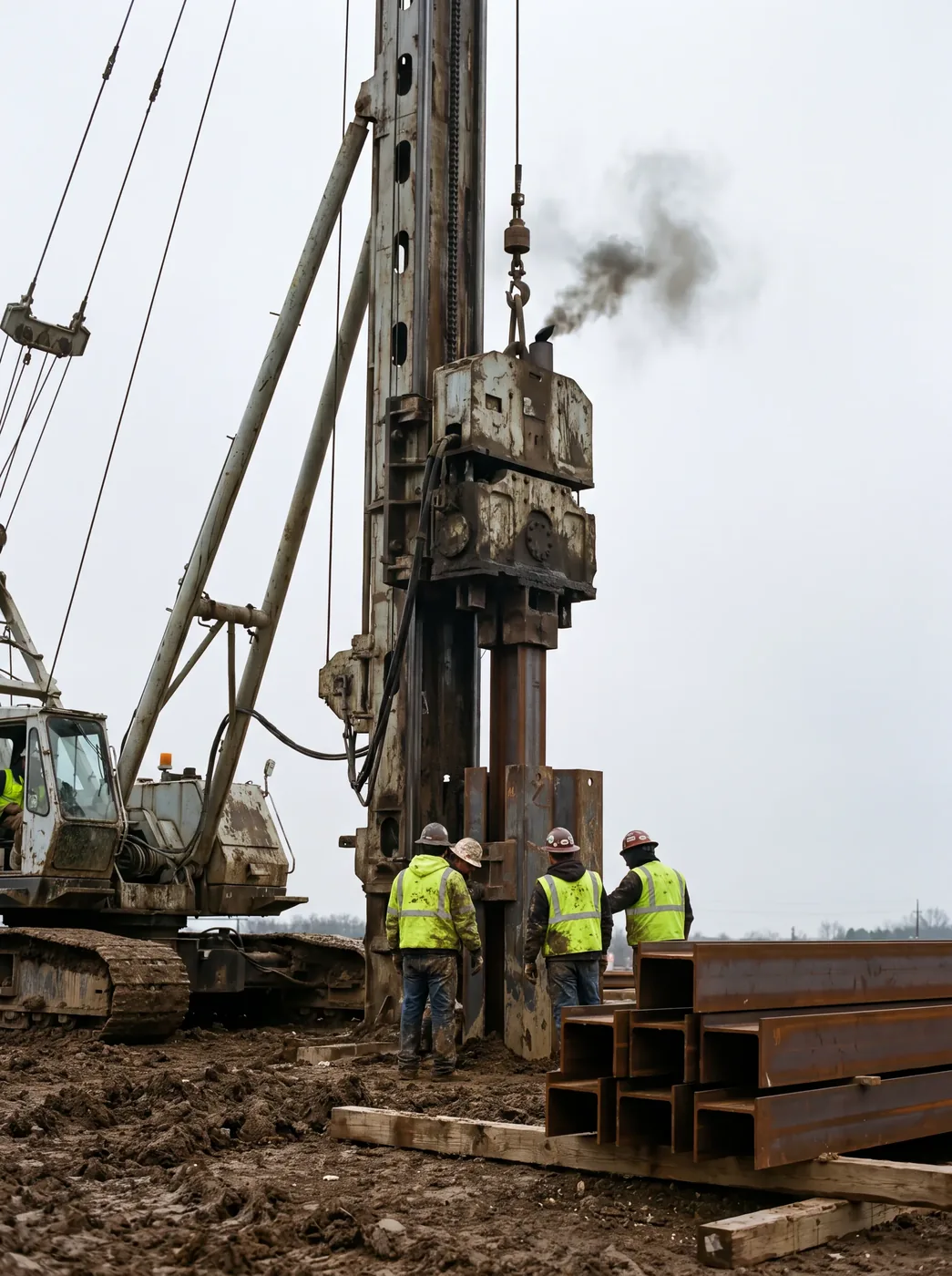
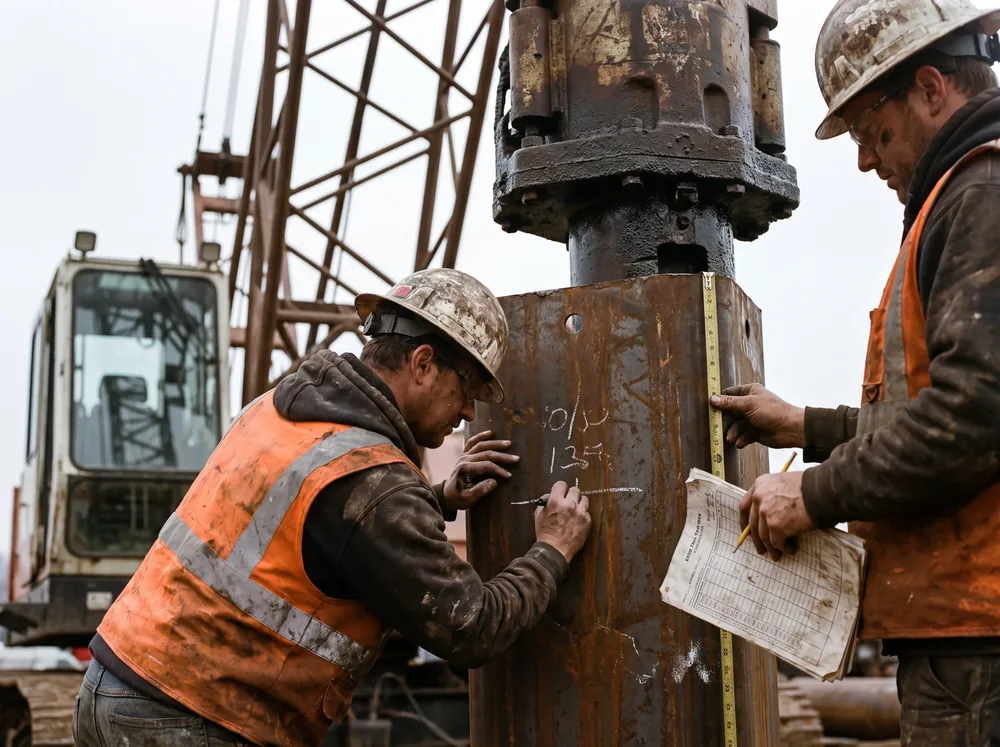
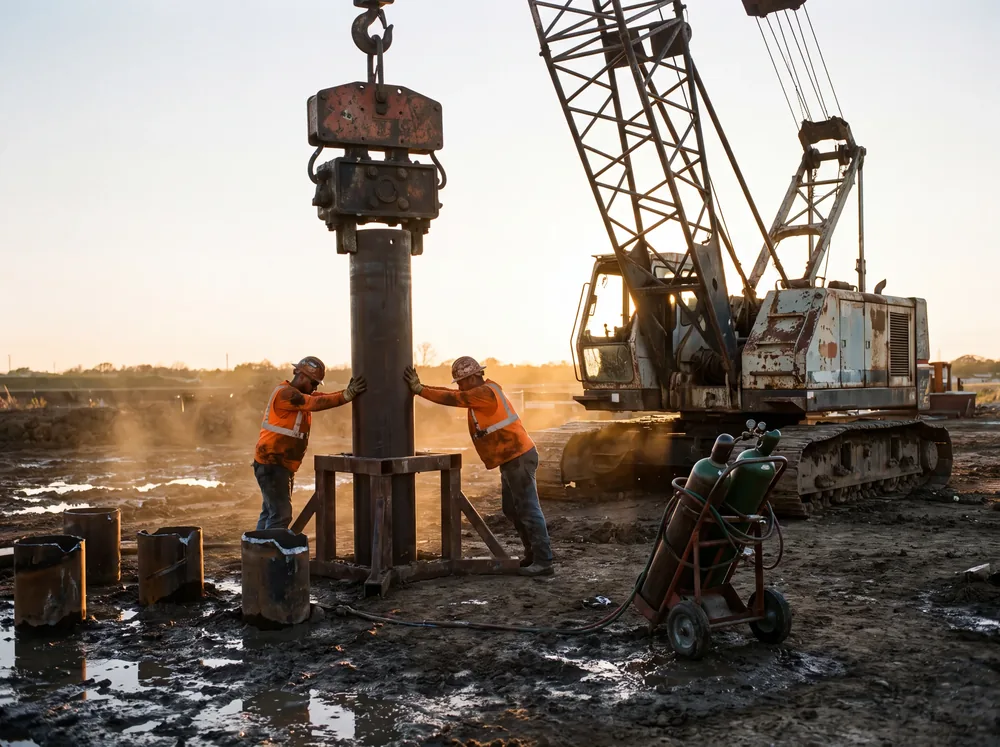
A crawler crane with leads and a diesel hammer driving a steel pile with the crew at the leadsA worker marking blow counts in chalk on a steel pile under the hammerA crane setting a pipe pile into a template as two workers guide it
Pile driving: the crane, the leads, the hammer, the crew, and the blow counts on one record
Built for the realities of the field
The daily reality

The piles were delivered Monday. The hammer arrives Thursday.

The pile sets the rig: the pile type and the design load decide the hammer the engineer will approve, the leads and the crane that carries them, the template and the driving criteria. The site sets the rest: the pile delivery, the survey layout, the vibration limits beside an occupied building that decide which hammer goes out, the engineer's inspector for the driving records, the noise hours, and the permit. A pile that hits refusal early or runs long re-decides the splices, the cutoffs, and the day. The crew runs that day on a group text, the inspector keeps the only complete driving record, and the office finds out the piles ran long when the customer disputes the extra footage.

01

Dispatch conflicts

Two jobs ask for the same crane with the same set of leads, the hammer the engineer approved for the second job is on the first, and the operator certified for the crane is on neither.

A crew and a delivered load of piles standing on a site with no hammer.

02

Compliance risk

The engineer's inspector will not let the first blow fall without the hammer submittal, the crane's annual inspection, and the vibration monitoring plan in hand, and all three are in the truck that left for the other job at 5 a.m.

A crane crew on the clock while the inspector waits for a binder.

03

Missing field truth

The driving records, the blow counts per foot, the splices, the cutoffs, and the standby for a late pile delivery come back on paper days later, and the office rebuilds the week from memory and the inspector's copy.

Splices and standby billed from memory, if they are billed at all.

From the quote to the field to the invoice

Readiness before the first blow. Visibility while the piles go in. Clarity when the job closes.

The quote, the crane and hammer schedule, the work order on the operator's phone, the driving record, the signed ticket with the splices and the standby, and the invoice are one record. The office sees the job the way the crew at the leads sees it, while the piles are going in, and the accounting system gets the result.

Included in the platform
ArsenalArsenal

The crane, the leads, and the hammer, ready to go out

The crane, the leads, the hammers, the templates, and the rigging gear each carry a record in Arsenal, owned or rented, tracked or not, with their inspections, capacity, and status. The job is planned from gear the yard knows is ready, and the papers are on the record before anyone asks for them.

RosterRoster

The pile crew, staffed without the phone calls

Every operator, pile driver, and welder is on Roster with a role and the weeks they are open, so the crew is staffed from the record and the welder for the splices is on the board before the piles arrive. The operator's certification goes out with the job as a document.

IntelIntel

Planned resources for every pile job

The accepted quote becomes the plan automatically, and Intel, Ribbiot's AI, adds planned resources for the crew and equipment each pile job requires. Sales or project management confirms them before the job goes to dispatch. Intel also reads every driving record as it lands and flags what needs attention. Intel proposes and a person confirms.

The modules
Pursuit

Splices, standby, and footage at one set of rates

Every pile job is priced from one book in Pursuit: the crane and hammer rates, the price per pile and per foot, and the splice, cutoff, and standby terms, so extra footage has a rate before the first pile runs long. The accepted quote is the job, with nothing typed in twice.

Command

Scheduling and dispatch

Command builds the job from the cranes, leads, hammers, and crews that are actually free, so a crane promised to two jobs shows at planning, before a load of piles lands on a site with no hammer. The hammer submittal, the permit, and the monitoring plan ride on the work order to the foreman's phone.

Capture

Driving records from the site

Capture puts the forms crews already know on the phone: the driving record with the blow counts, the timecard, the splice and cutoff log, the inspection, and the customer's signature, submitted against the work order the same day. A finding on any of them reaches the right person that day.

Secure

Payroll and billing from the record

Secure hands the payroll and accounting systems you already use the approved hours and the signed ticket as payroll-ready and invoice-ready records. The splices, the cutoffs, and the extra footage are billed from the driving record, so the invoice matches the record the engineer holds.

Track

Where the leads and the hammers are

Leads, hammers, templates, and rigging gear never carried telematics. Track puts live location and tap-to-access documents on them through Ribbiot's own trackers, so dispatch knows which site the hammer is on before it promises it to the next one. No hardware is required to be a customer.

The platform

One platform. The whole job.

Start on the workflow that hurts most and add the next when the office and the field trust what they see.

Explore the platform ↗
See the difference

The same week, in the fog and on one record.

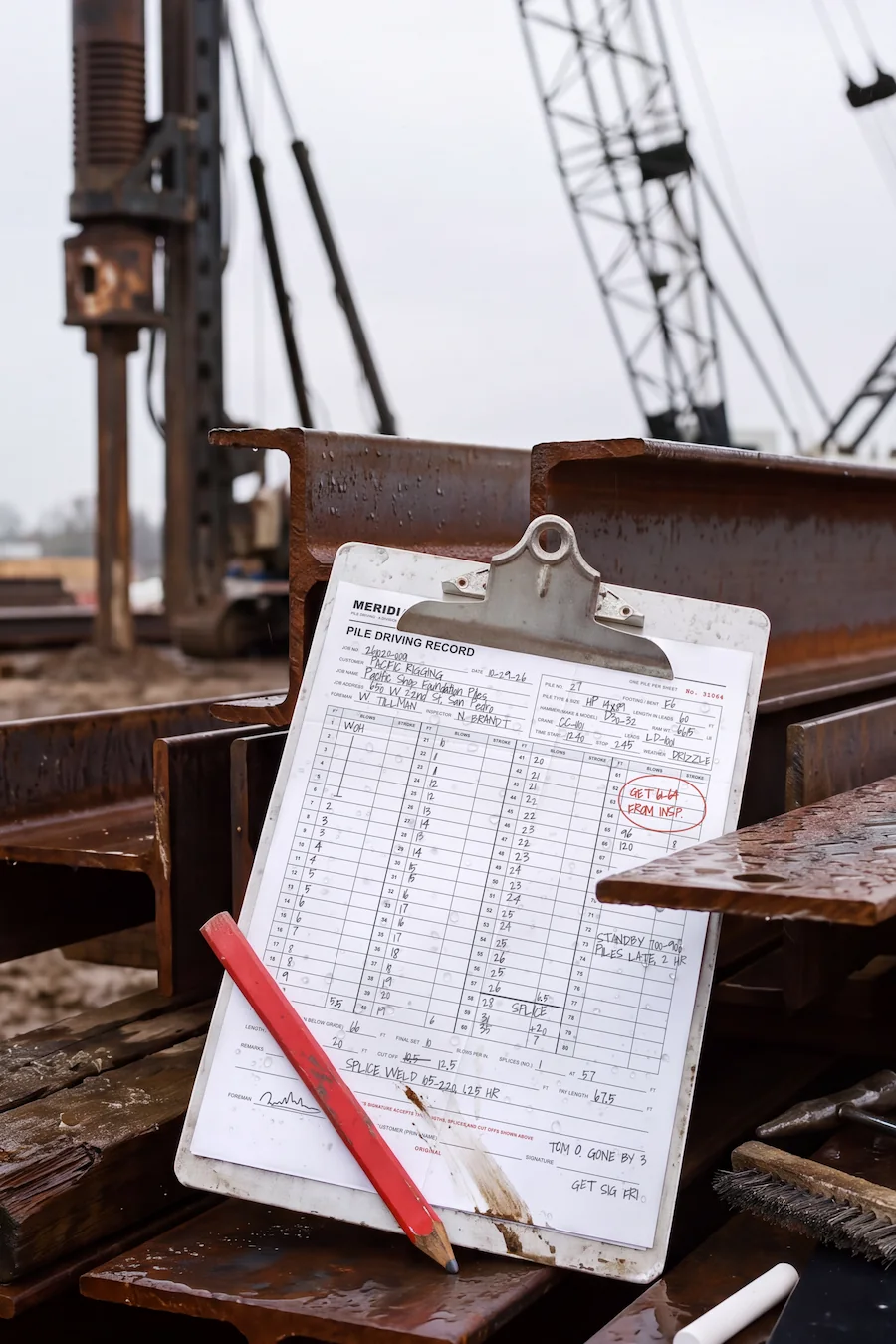
A staged picture: a paper pile driving record on a clipboard set on steel piles in the rain, blow counts in pencil, four feet circled in red and no customer signature, the leads and hammer beyond.
Without Ribbiot

In the fog.

  • A crane and its leads are promised to two jobs.
  • The hammer is on the wrong site.
  • The driving records are on paper nobody can find when the engineer asks.
  • Splices and cutoffs are argued with the engineer after the invoice.
  • Standby for a late pile delivery is lost between the site and the office.
  • The crane's annual inspection is found expired before the first blow.
  • The pile job is retyped at the quote, the board, and the invoice.
  • Margin per job is known a month after the last pile.
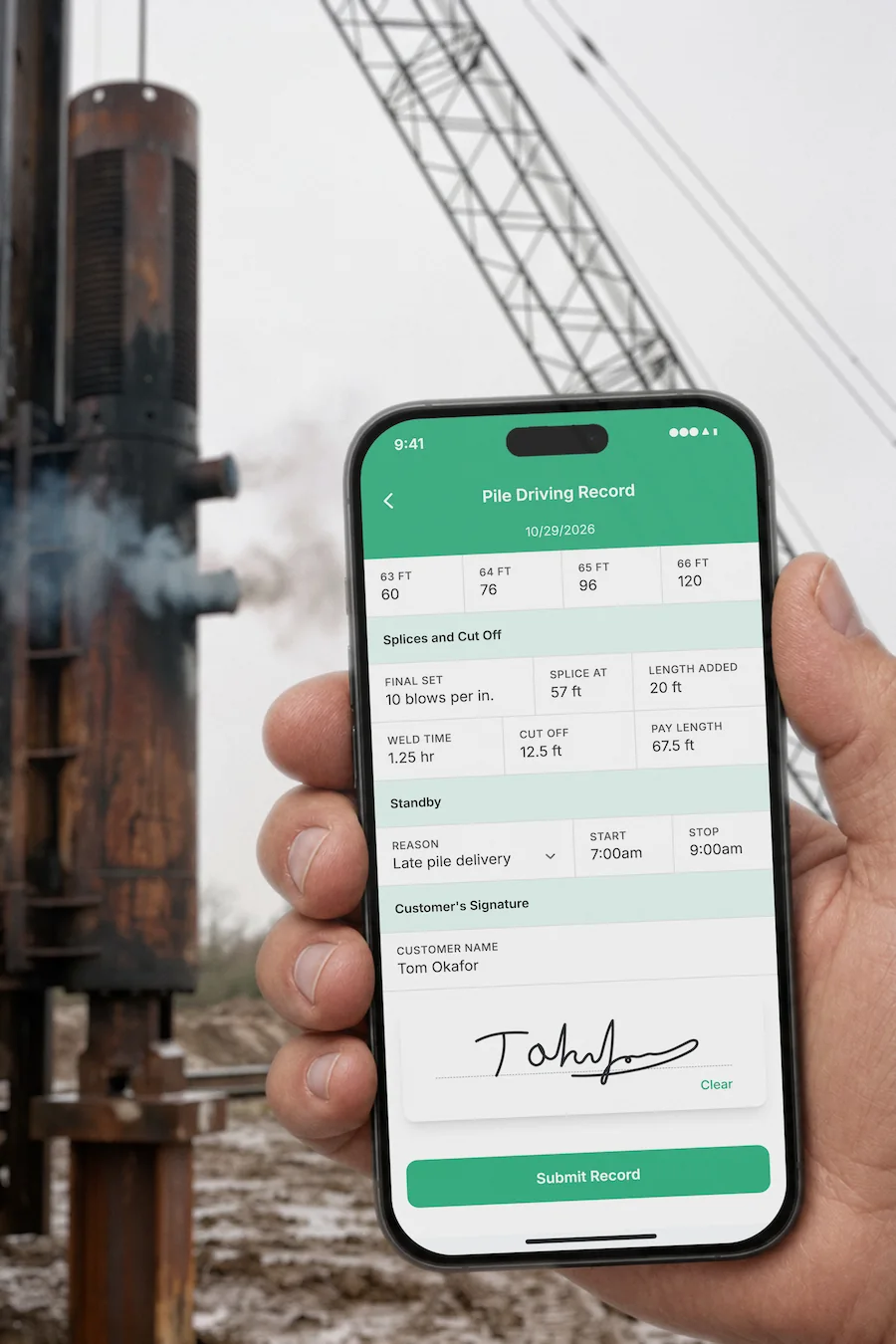
A composite picture: a hand holds a phone showing a signed pile driving record in the Ribbiot mobile app, in front of a diesel pile hammer at work and a crane boom on a muddy site. Example data.
With Ribbiot

On one record.

  • The crane, the leads, and the hammer are committed once, to one job.
  • Every hammer and every set of leads is on the record, with its location and papers.
  • The permit and the monitoring plan are on the job before the crane rolls.
  • Driving records and blow counts are on the record before the inspector leaves.
  • Splices, cutoffs, and standby are signed for on the site, so they get billed.
  • A missing hammer submittal or an expired inspection shows at planning, before the first blow.
  • The pile job is entered once, from the quote to the invoice.
  • Margin per job shows while the decisions that set it are still in reach.
Also built forMobile crane service

Remove the Fog of Operations

Bring one job.Get a clearer operating picture, from readiness to revenue.

Walk one job