Tower crane operations

Every jump.Tied in.

Ribbiot runs a tower crane on one record for as long as it is up, from the quote to the invoice: the erection, each climb, the operator in the cab, the daily checks and the monthly inspection, the hours, and the dismantle, so the office, the yard, and the field run on the same truth.

Walk one job

Bring one job to a 60-minute discovery call. We walk it with you from the quote to the invoice and show what one record changes at each handoff.

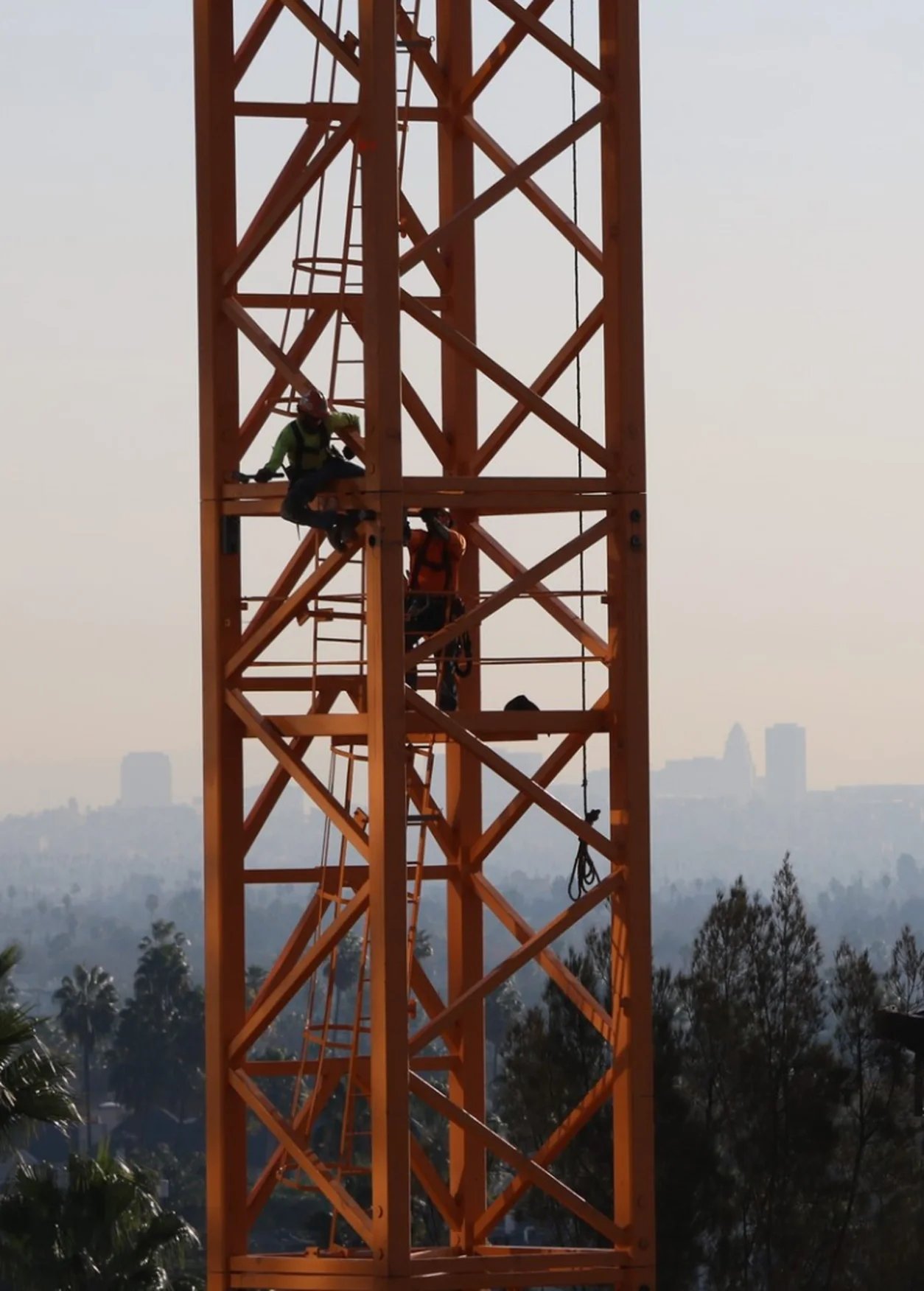
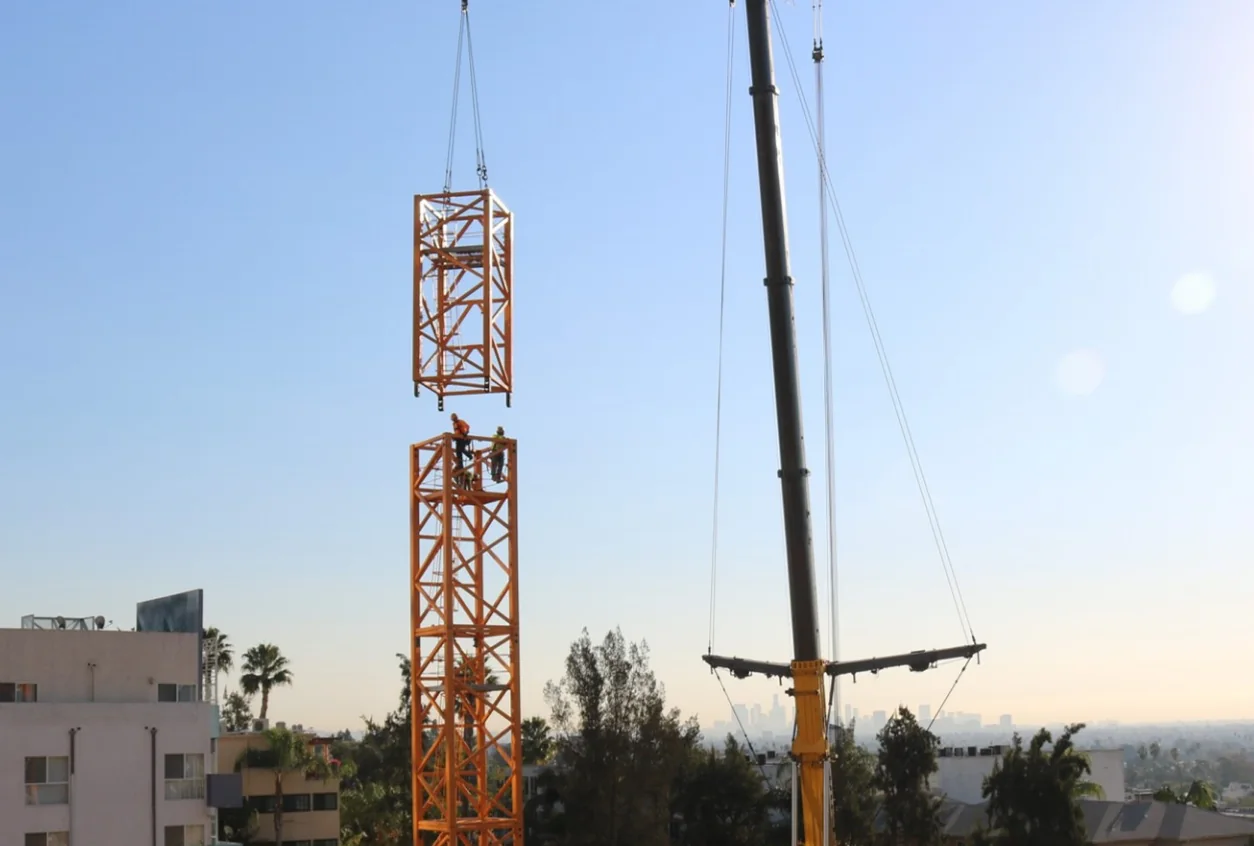
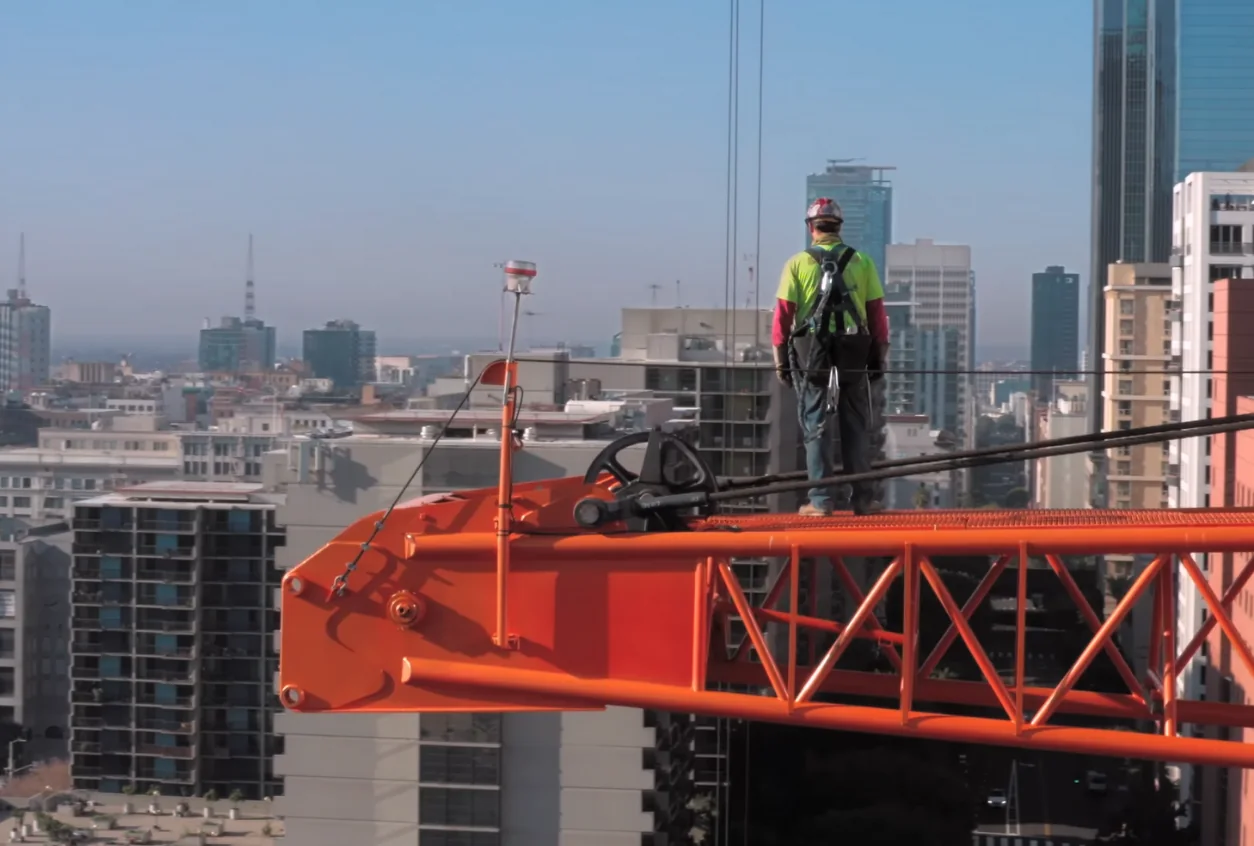
Two erectors working inside the mast of a tower crane high above a city, the skyline in haze behind themA mobile crane lowering a mast section onto a tower crane while two erectors wait on top of the mastAn erector in a harness standing on the tip of a tower crane's jib, a downtown skyline behind him
Tower crane operations: the erection, the jump, the operator, and the log book on one record
Built for the realities of the field
The daily reality

The monthly was done. Nobody on the ground can prove it.

A mobile crane leaves when the pick is done. A tower crane stays for the length of the job, and the building sets its configuration: the height decides the mast sections and the tie-ins, the reach decides the jib, and the heaviest pick at the far end decides the crane. The foundation is engineered, and an engineer checks the building it is tied to before every climb. The erection is a job of its own, with an assist crane, a crew, the permits, and a load test when the crane is up. Then one operator runs it for months, with a check before every shift, an inspection every month, and the wind deciding the day. All of it is lined up by phone and whiteboard, and the record of it sits in a log book in the cab, at the top of the mast.

01

Dispatch conflicts

An erection on one site and a jump on another land on the same Saturday. Both want the same crew, and the climbing frame the jump needs is still on a crane across town.

A crew on the clock with no frame to climb with, and a site that gave up the hook.

02

Compliance risk

The general contractor's safety lead asks for last month's inspection. It was done: the signed copy is in the technician's truck, the daily checks are in the log book in the cab, and the load test is in a file at the office.

A crane that passed, standing until someone can prove it.

03

Missing field truth

The operator notes wear on the hoist rope at the daily check, and the note stays in the log book until the technician's next visit. The overtime from a pour that ran late comes back on a paper timecard days later, if it comes back at all.

A finding nobody on the ground has read, and overtime never billed.

From the quote to the field to the invoice

Readiness before the crane goes up. Visibility while it stands. Clarity when it comes down.

The quote, the erection and climb schedule, the work order on the operator's phone, the daily checks, the monthly inspection, the signed timecards, and the invoice are one record. The office sees each crane the way the operator in the cab sees it, for as long as it stands, and the accounting system gets the result.

Included in the platform
ArsenalArsenal

Every crane and every section on its record

Arsenal holds every tower crane and all that goes up with it: mast sections, tie-in collars, the climbing frame, jib sections, and counterweights, owned or rented, tracked or not, each with its status and documents. The load test, the monthly, and the annual sit on the crane's record and open on a phone on the ground.

RosterRoster

An operator for every cab, and a relief

Roster carries every operator, erector, and technician with a role and the weeks each is committed, so the operator who stays with a crane, the relief who covers a week off, and the crew for the next climb come off the record, with no round of calls. The operator's certification rides with the job as a document.

IntelIntel

Planned resources for every climb

The accepted quote becomes the plan automatically, and Intel adds planned resources for the crew and equipment each erection and climb requires. Sales or project management confirms them before the job goes to dispatch. Intel also reads every daily check as it lands and flags what needs attention. Intel proposes and a person confirms.

The modules
Pursuit

The whole job, priced from one book

Every tower crane job is priced in Pursuit from one price book: the erection and the dismantle, each climb, the monthly rent, the operator's hours, and the overtime rate, so two estimators quote the same crane the same way. The accepted quote becomes the plan, with nothing typed twice.

Command

Every erection and climb on one board

Command plans each erection, climb, and dismantle from the crews, the assist crane, the climbing frame, and the sections that are free, so a crew promised to two sites shows at planning instead of on Saturday morning. The erection plan, the permit, and the engineer's sign-off ride on the work order to the foreman's phone.

Capture

Checks and hours from the cab

Capture puts the forms crews already know on the phone: the daily check, the monthly, and the timecard, submitted against the crane's work order. They work where there is no signal and sync by themselves when the signal returns. A finding on a daily check reaches the right person that day.

Secure

Payroll and billing from the record

Secure turns the approved hours and the signed timecards into payroll-ready and invoice-ready records for the accounting and payroll systems you already use. The overtime, the second shift, and the extra climb are on that month's invoice because each was captured the day it happened.

Track

Where every section is

Mast sections, tie-in collars, jib sections, and counterweights never carried telematics. Track puts live location and tap-to-access documents on them through Ribbiot's own trackers, so the sections for the next climb are found before the truck is booked. No hardware is required to be a customer.

The platform

One platform. The whole job.

Start on the workflow that hurts most and add the next when the office and the field trust what they see.

Explore the platform ↗
See the difference

The same week, in the fog and on one record.

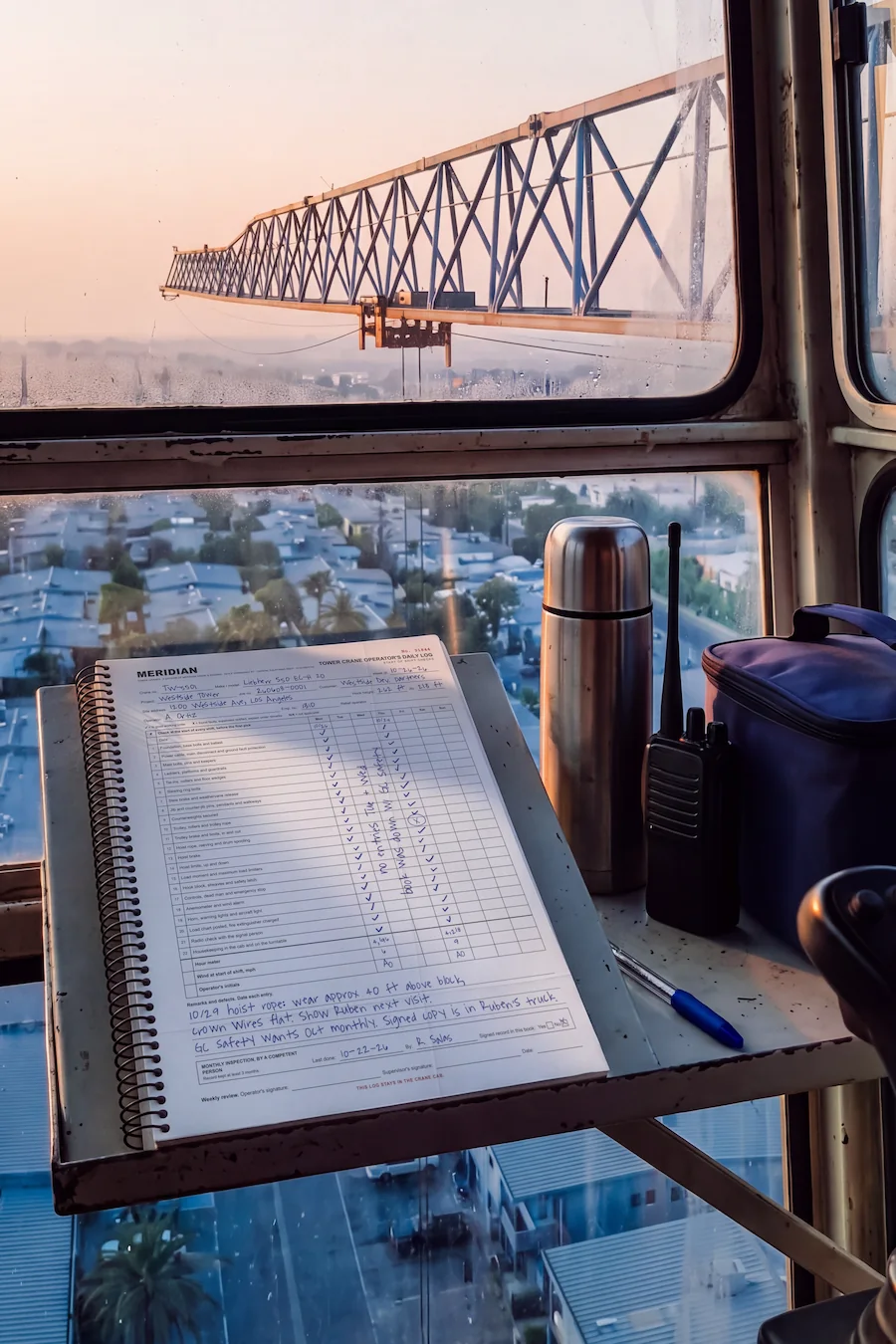
A staged picture: a tower crane operator's paper inspection log open in the cab at first light, two days left blank and a note on the hoist rope, the jib and the city far below.
Without Ribbiot

In the fog.

  • One erection crew is promised to two sites on the same Saturday.
  • The climbing frame the jump needs is on a crane across town.
  • The daily checks sit in a log book in the cab.
  • The monthly inspection is signed, then filed in the technician's truck.
  • A finding stays in the log until the technician's next visit.
  • When a pour runs late, the overtime sits on a paper timecard for a week.
  • The crane is retyped at the quote, the board, and the invoice.
  • Margin is known a month after the crane comes down.
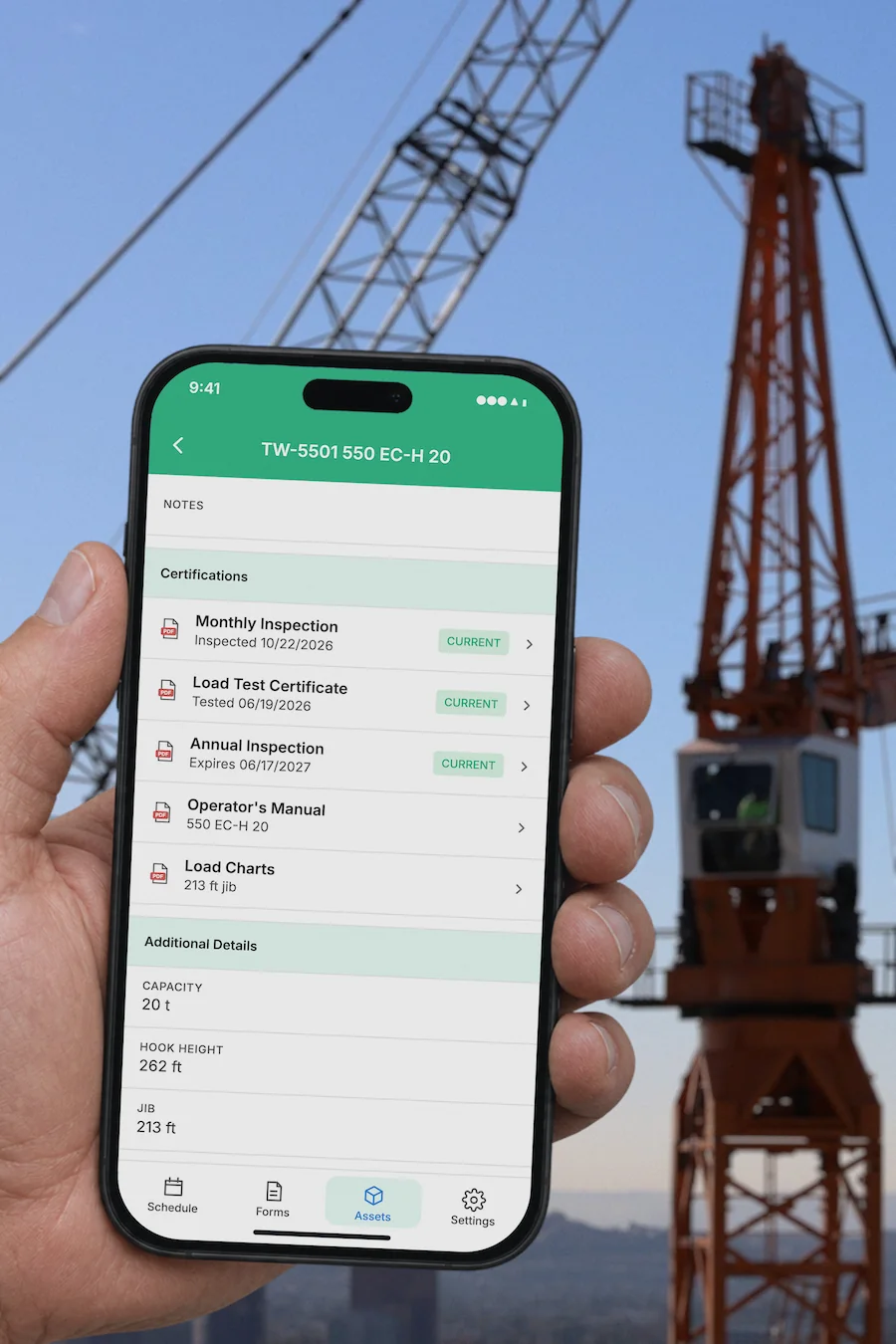
A composite picture: a hand holds a phone showing a tower crane's record in the Ribbiot mobile app, the monthly inspection marked current, a tower crane over a city behind it. Example data.
With Ribbiot

On one record.

  • The crew and the assist crane are committed once, to one erection.
  • The climbing frame and every mast section are on the record, with inspection and location.
  • The daily check is on the record the day it is done.
  • The monthly inspection opens on a phone when the safety lead asks for it.
  • A finding on a daily check reaches the right person the same day.
  • When a pour runs late, the overtime is on the timecard that night, so it gets billed.
  • The crane is entered once, from the quote to the invoice.
  • Margin on each crane shows while the decisions that set it are still in reach.

Remove the Fog of Operations

Bring one job.Get a clearer operating picture, from readiness to revenue.

Walk one job