Physical Operations Platform
One record of your people, equipment, and jobs, shared by the office and the field.
Included in the platform

The first AI-native operating system purpose-built for the equipment-centric specialty trades, where no two jobs go out the same way. One record connects people, process, and equipment from first quote to final invoice, and Intel, Ribbiot's AI, learns from all of it. The office, the yard, and the field run on the same truth.
Explore the platform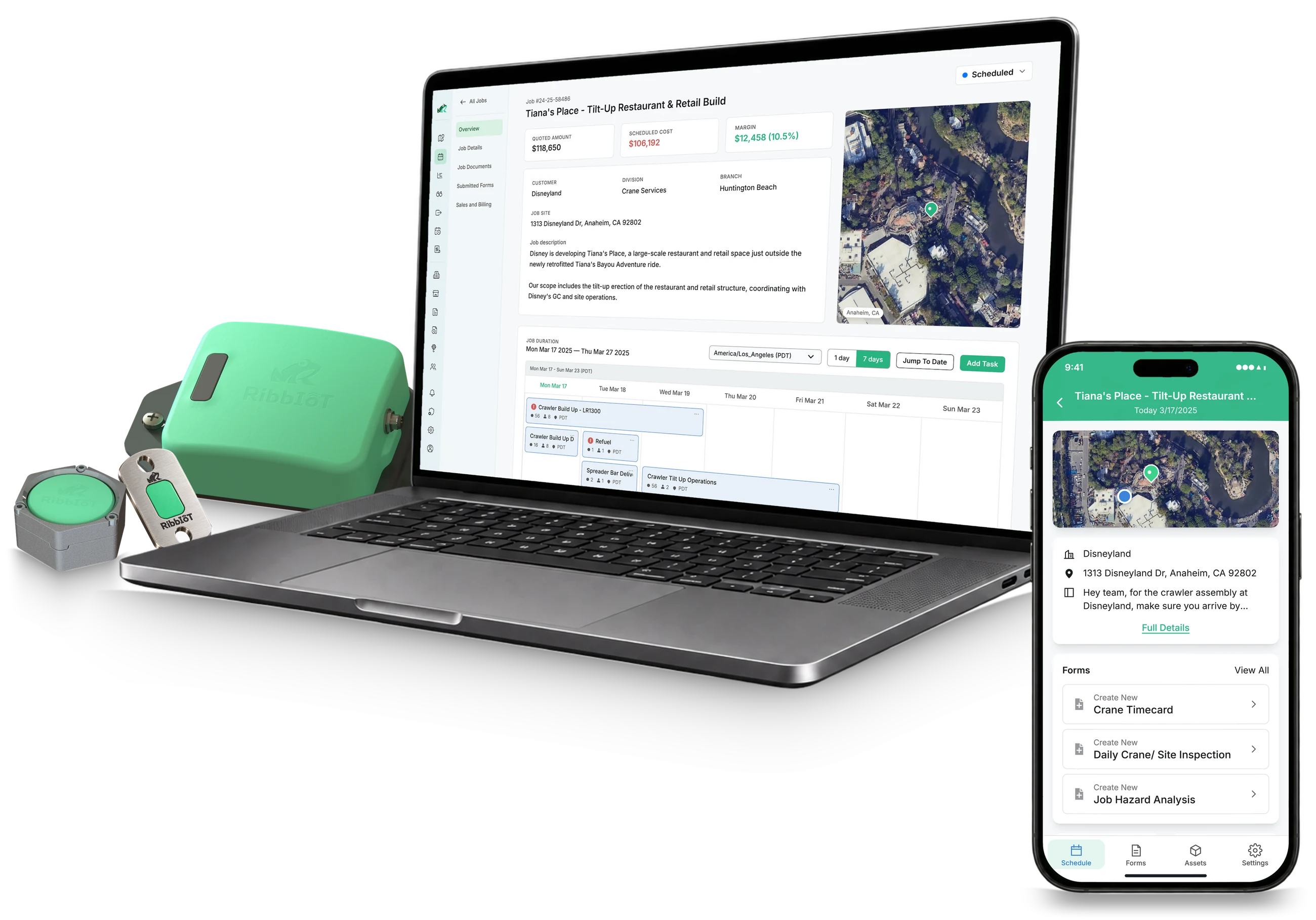
Every job is a new configuration of equipment, crew, certifications, permits, and site conditions, and the record carries that configuration from the quote to the plan, the board, the ticket, and the invoice, so the office, the yard, and the field run on the same truth.
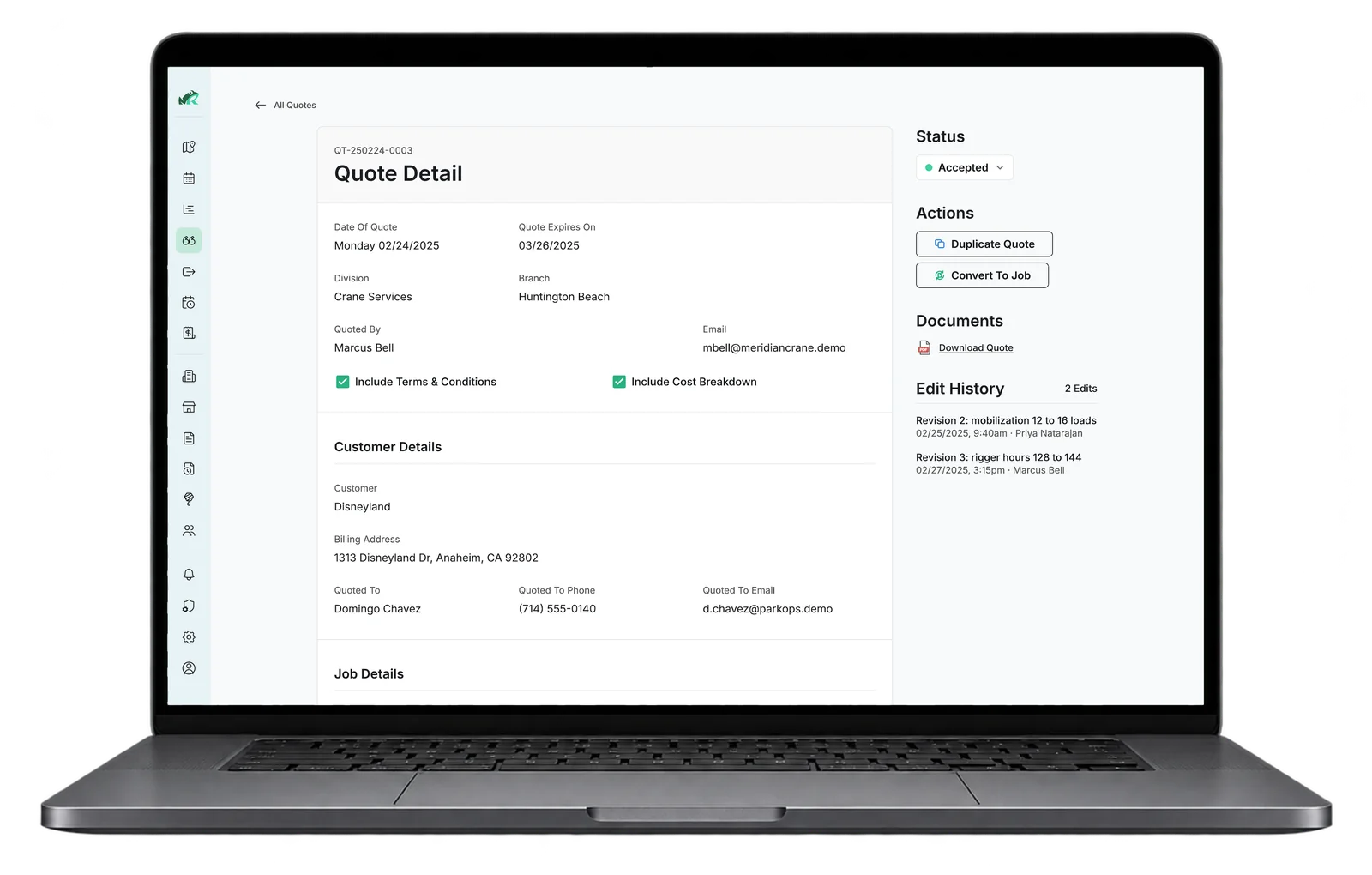
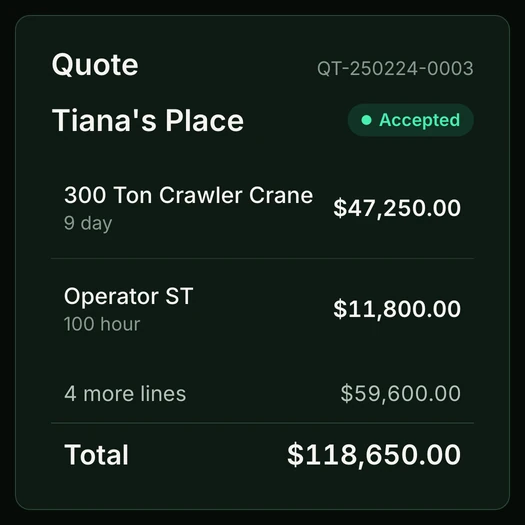
Quote QT-250224-0003 names a 300-ton crawler, nine working days, and six lines for $118,650.00, and comes back accepted on 03/03/2025.

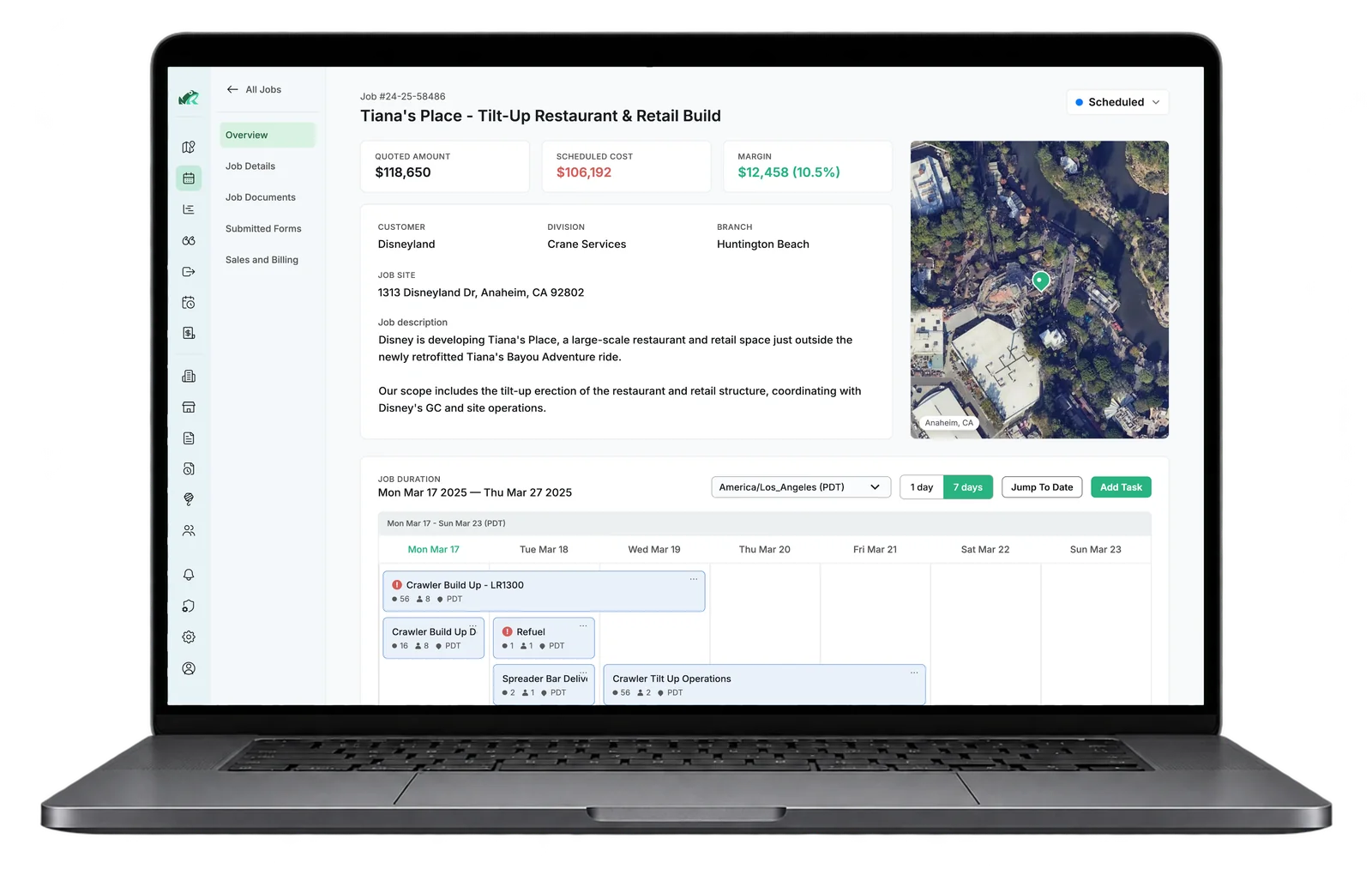
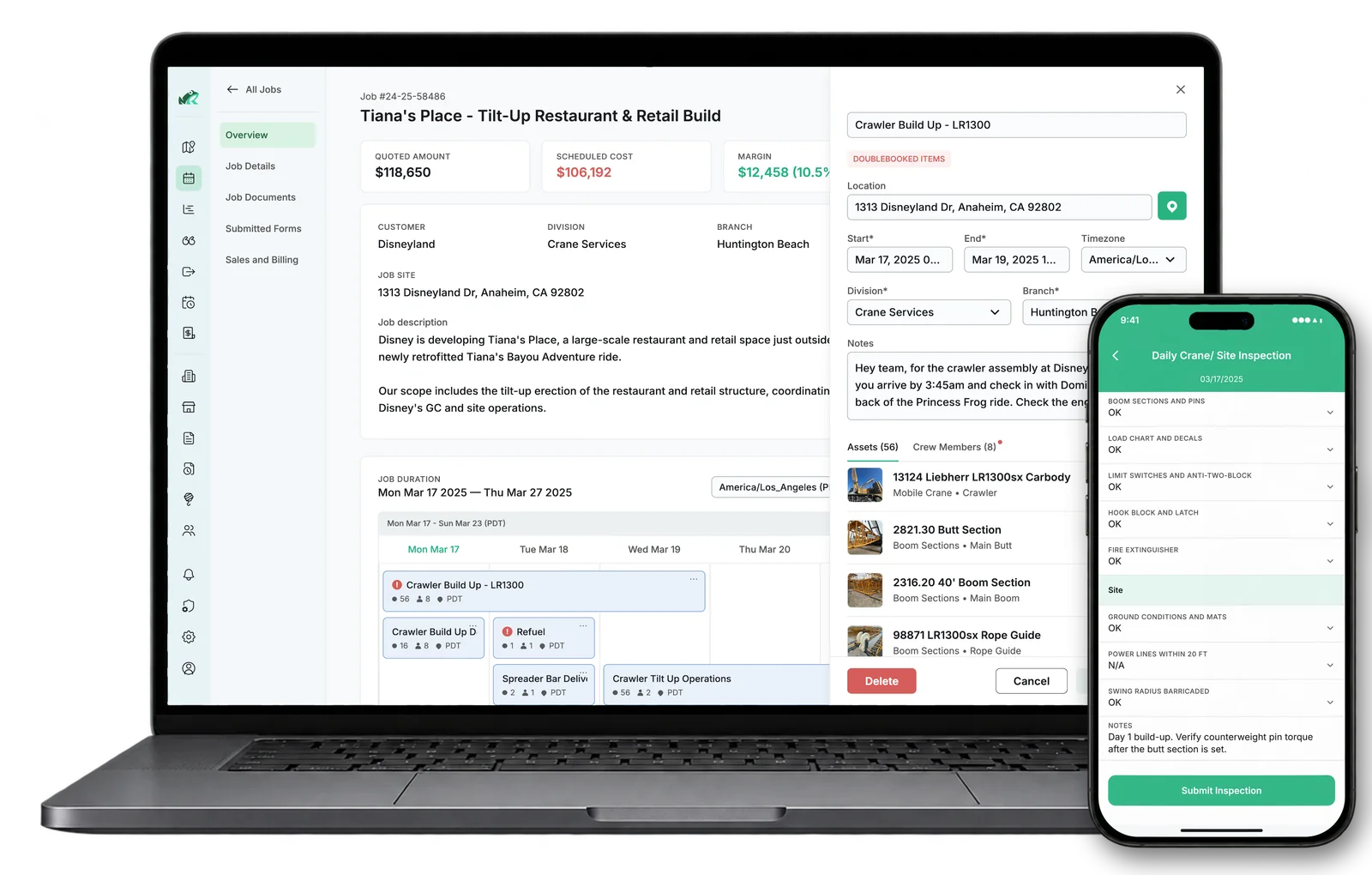
The accepted quote becomes job 24-25-58486 without being retyped: the site, the dates, the scope, and a build-up task that carries 56 assets and 8 crew.
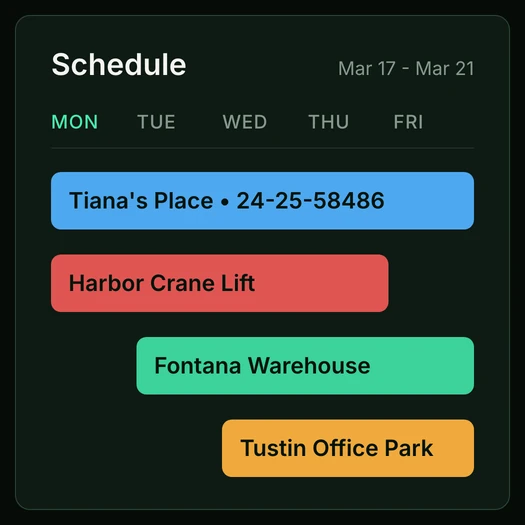
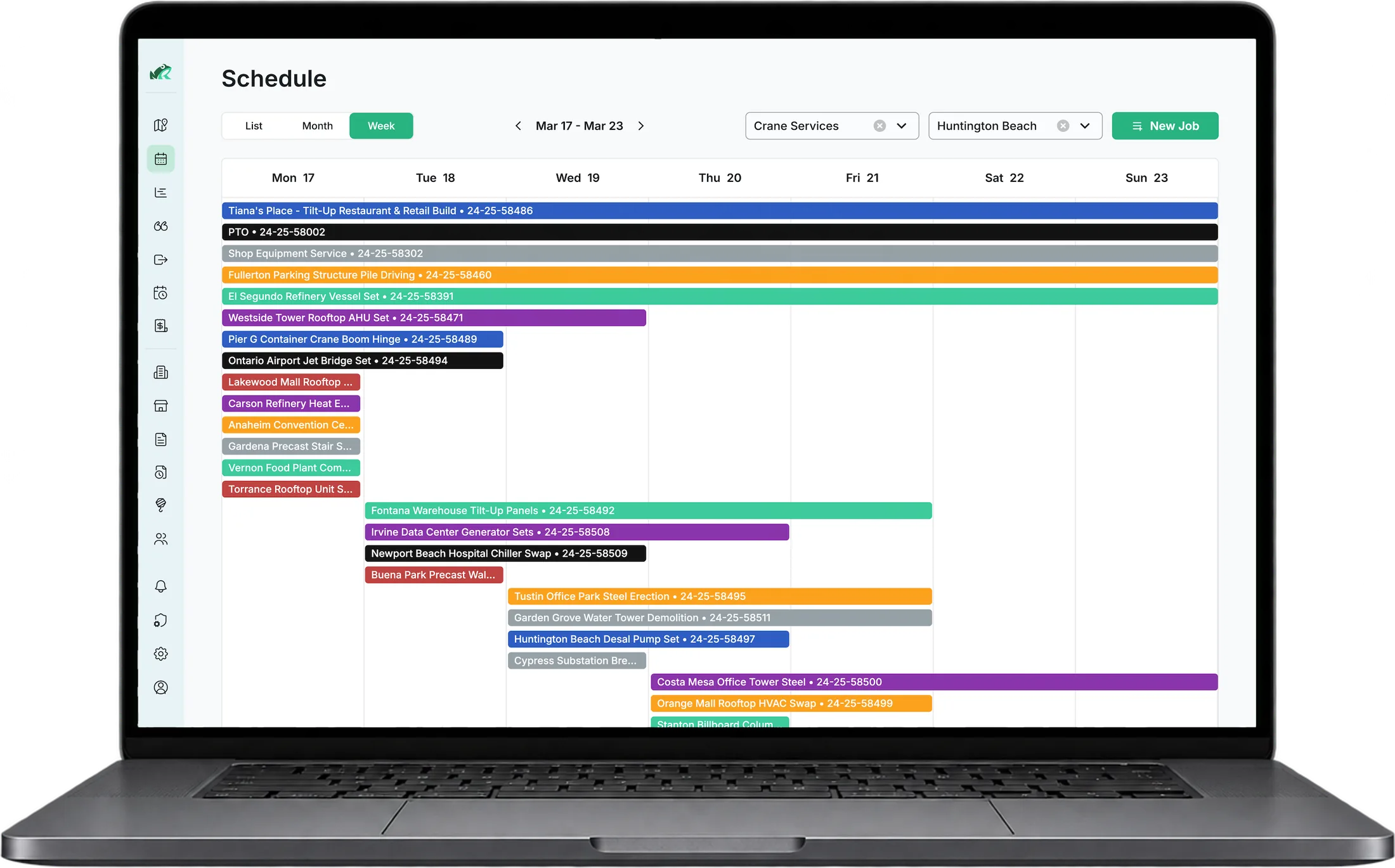
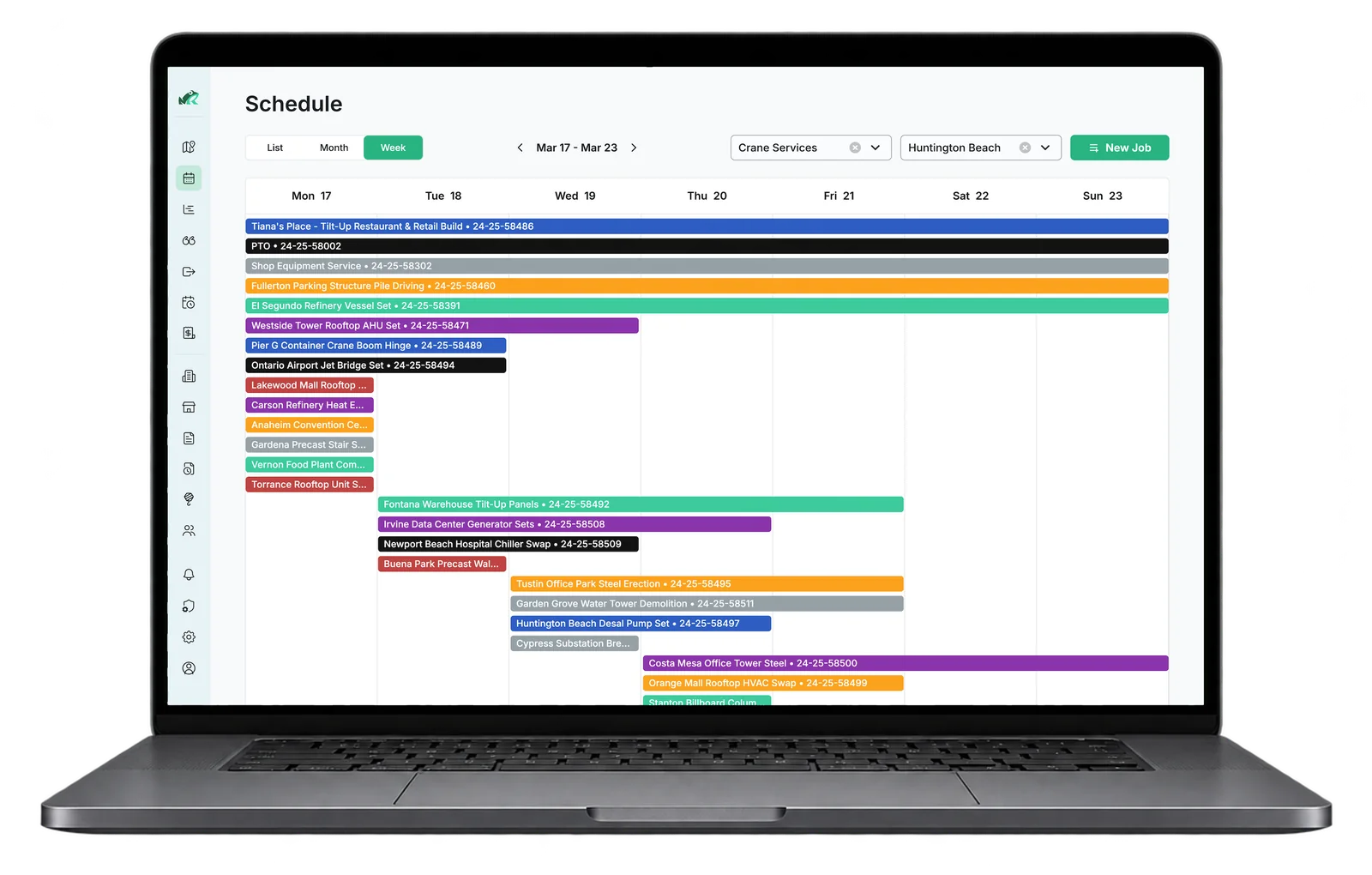
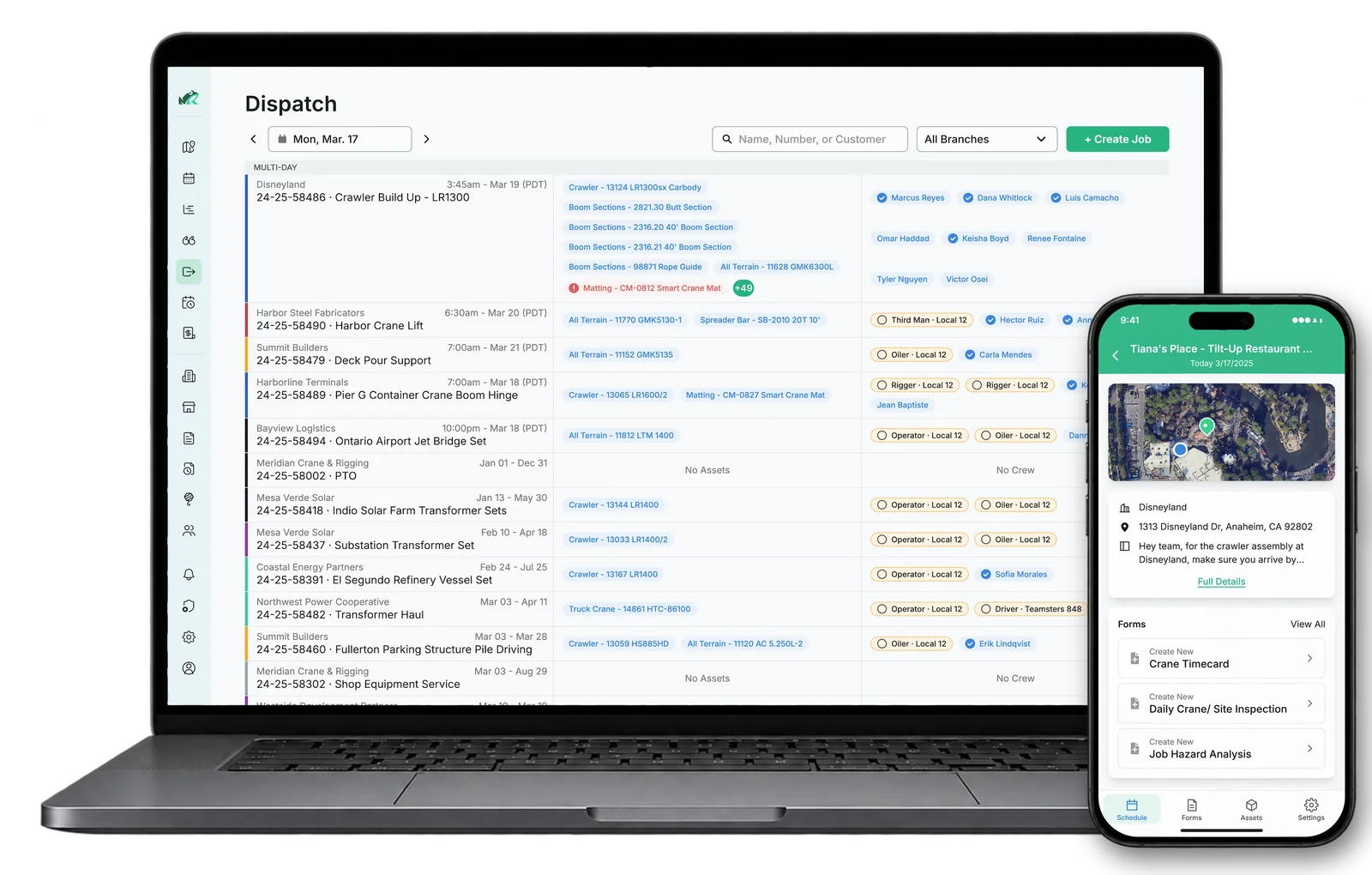
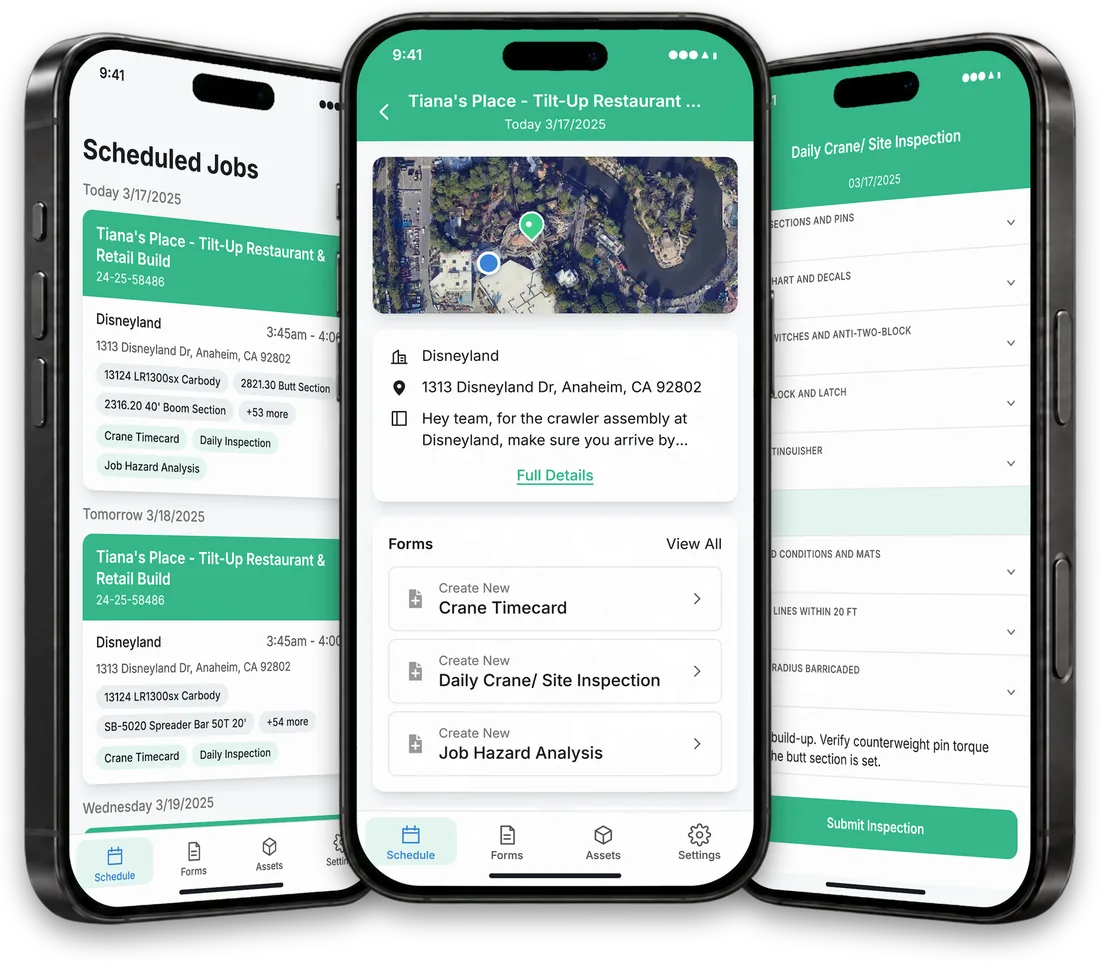
The week of 03/17 on one board: Tiana's Place runs Monday to Sunday among the branch's other jobs, one job per row, filtered to Crane Services and Huntington Beach.
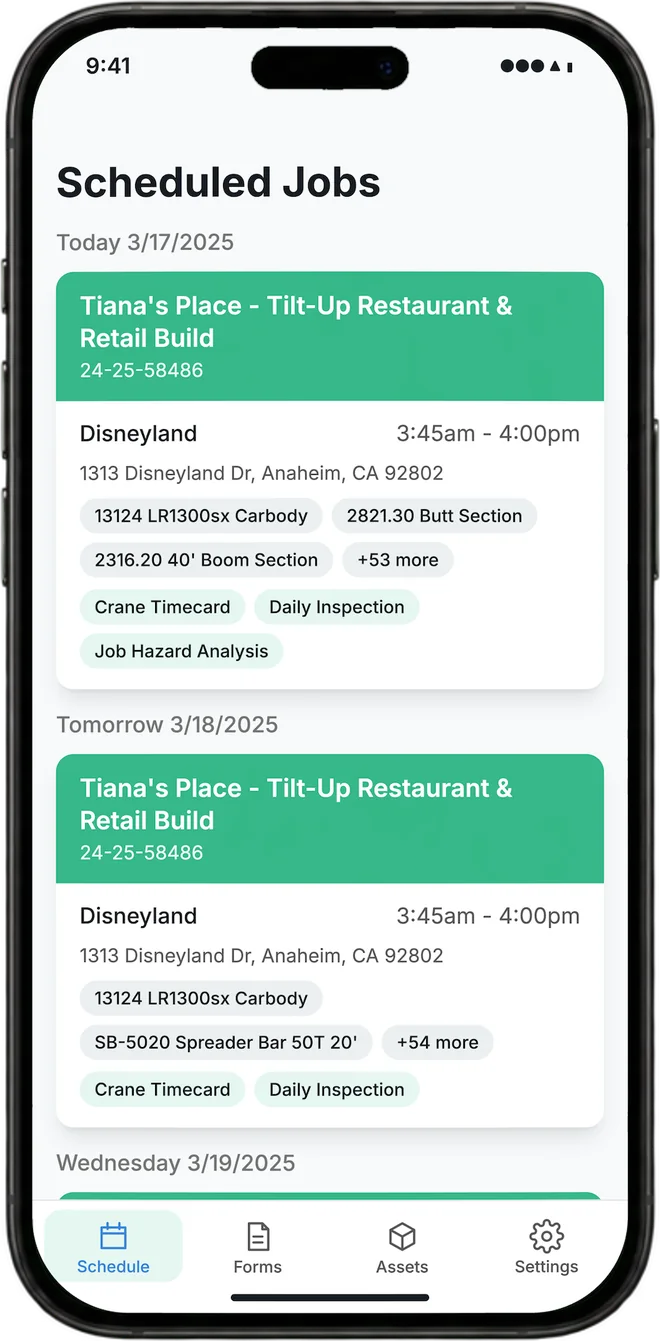
Monday's dispatch board names the carbody, the boom sections, the assist crane, and the mat, and the crew opens the same work order on the phone, with the site map and the 3:45am note.
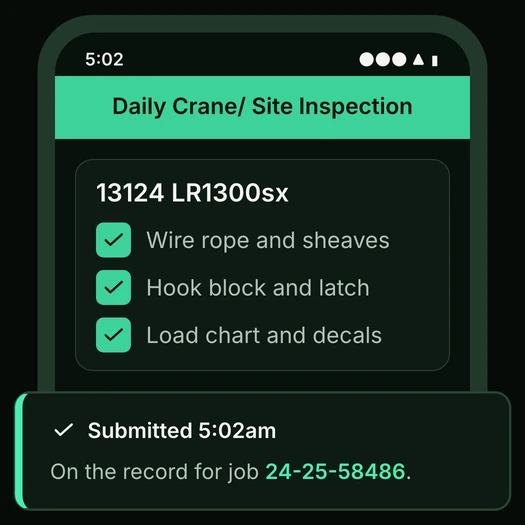
The daily crane and site inspection goes in from the phone at 5:02am, before the first pick, against the task that carries the job's crew and assets.

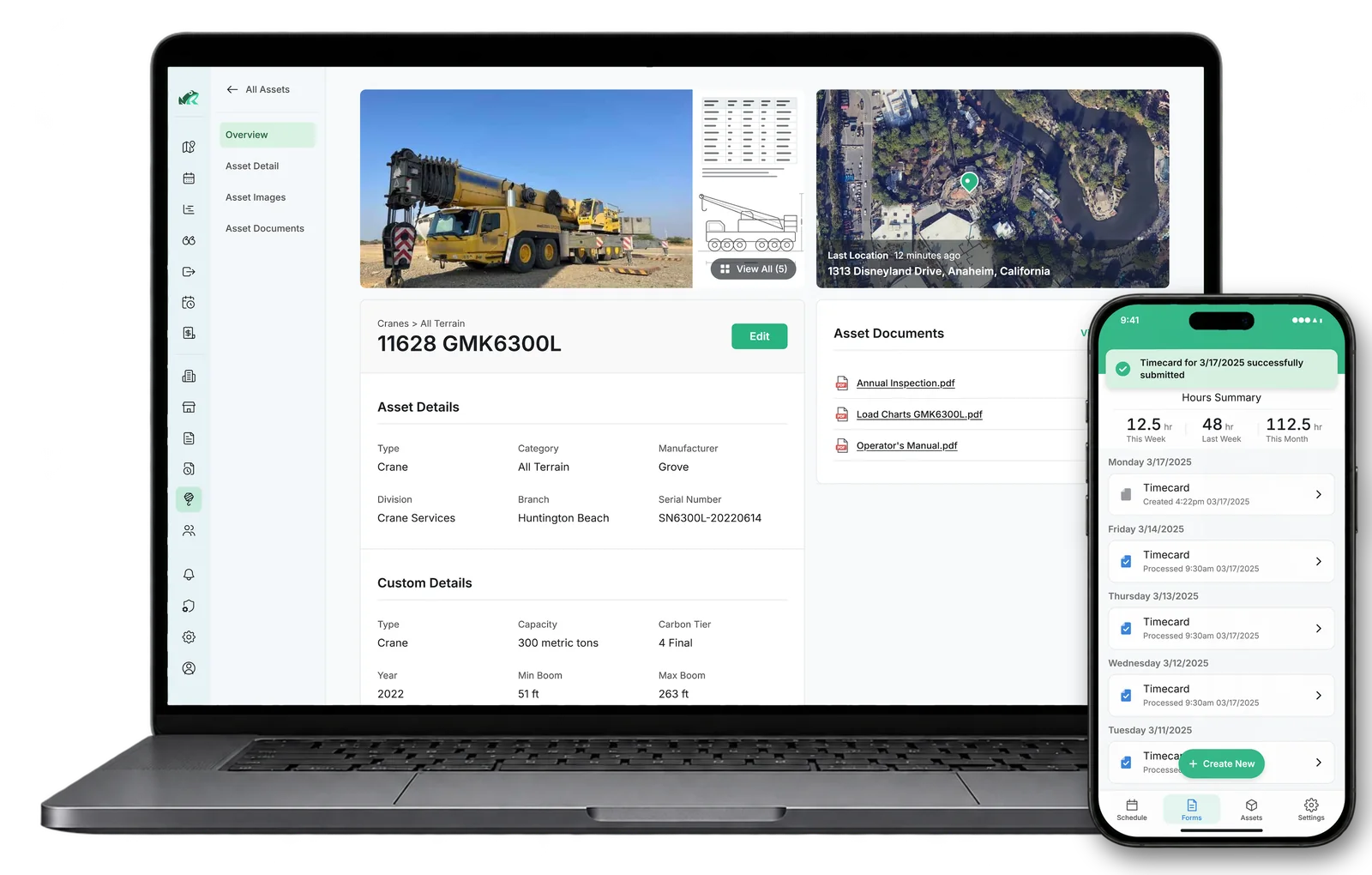
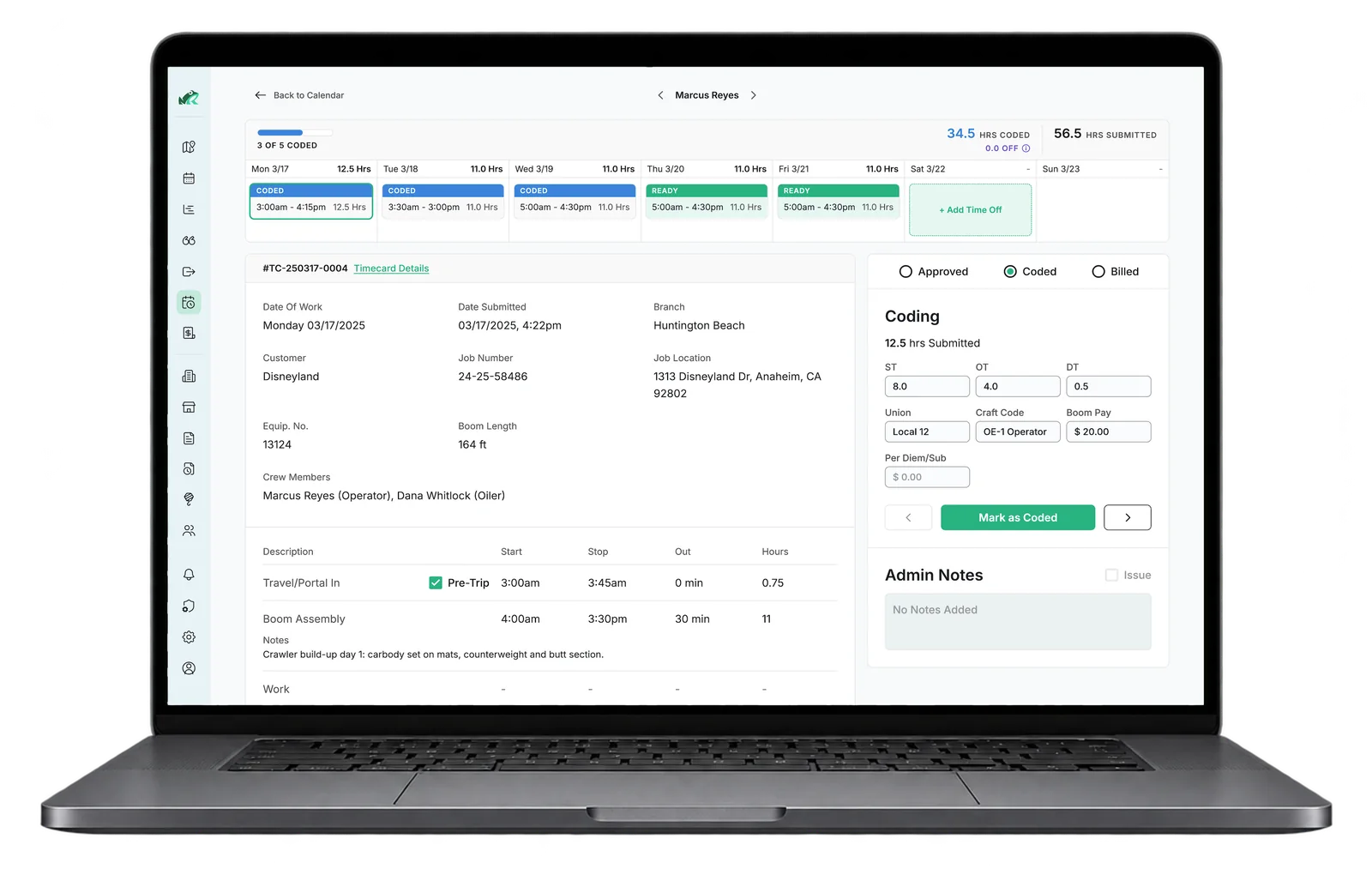
The timecard goes in from the cab at 4:22pm with the week's hours counted, and the assist crane's record shows where it stands, its details, and its documents.
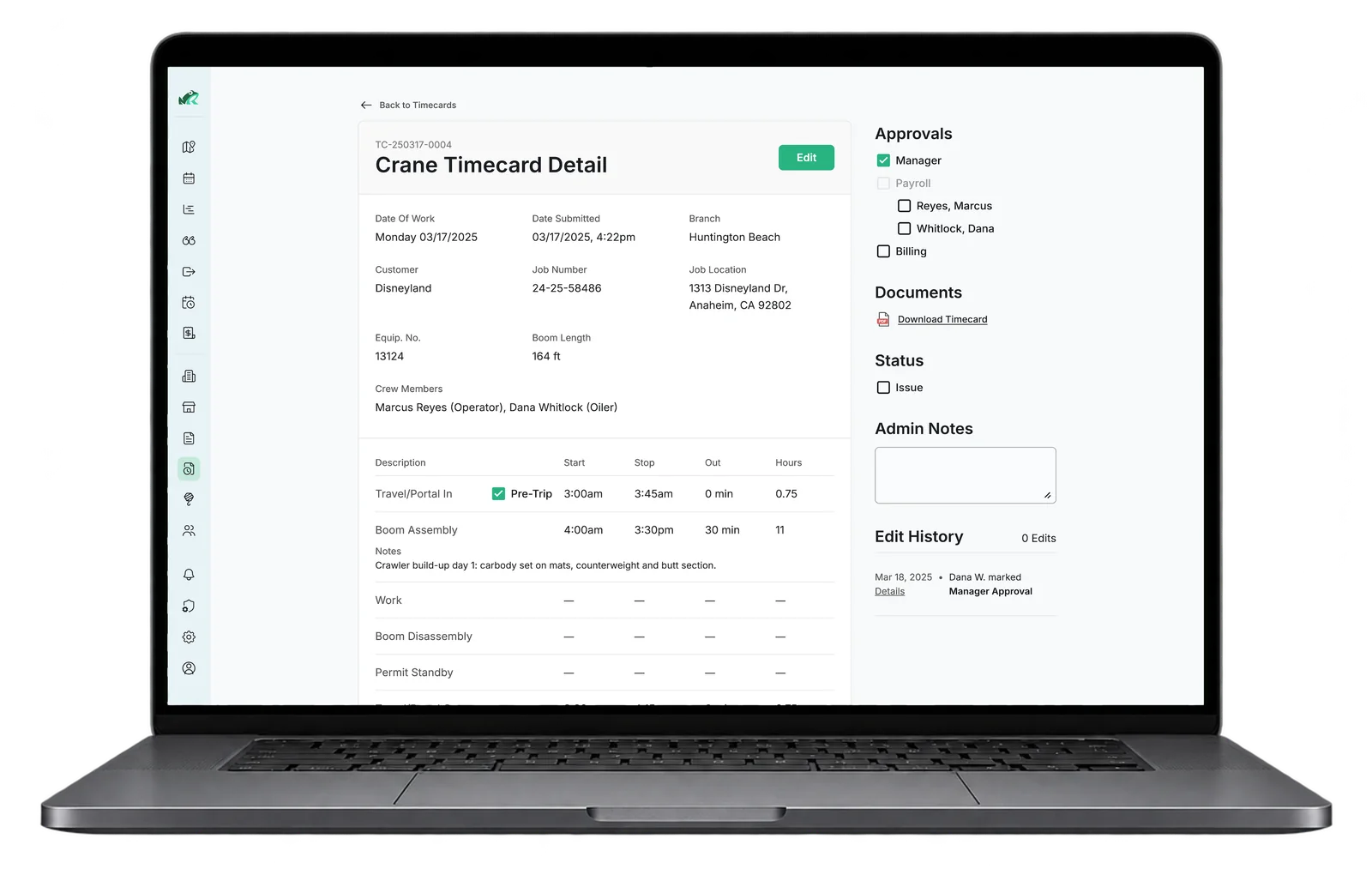
On Tuesday morning the manager checks the operator's Monday card, 12.5 hours on the job, and hands it to payroll with one box.
Payroll codes the same card: eight hours straight time, four overtime, half an hour double time, with his union and craft code, ready for the payroll system.

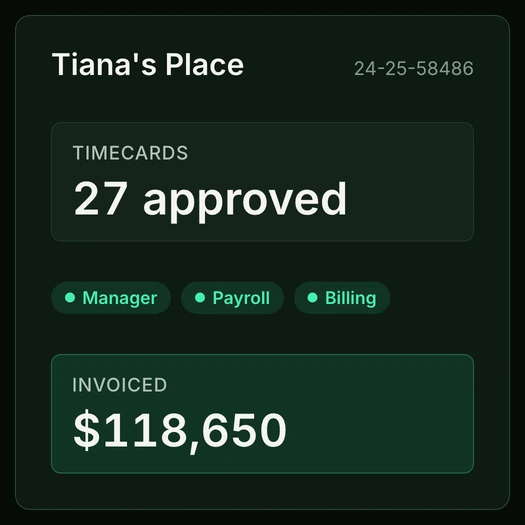
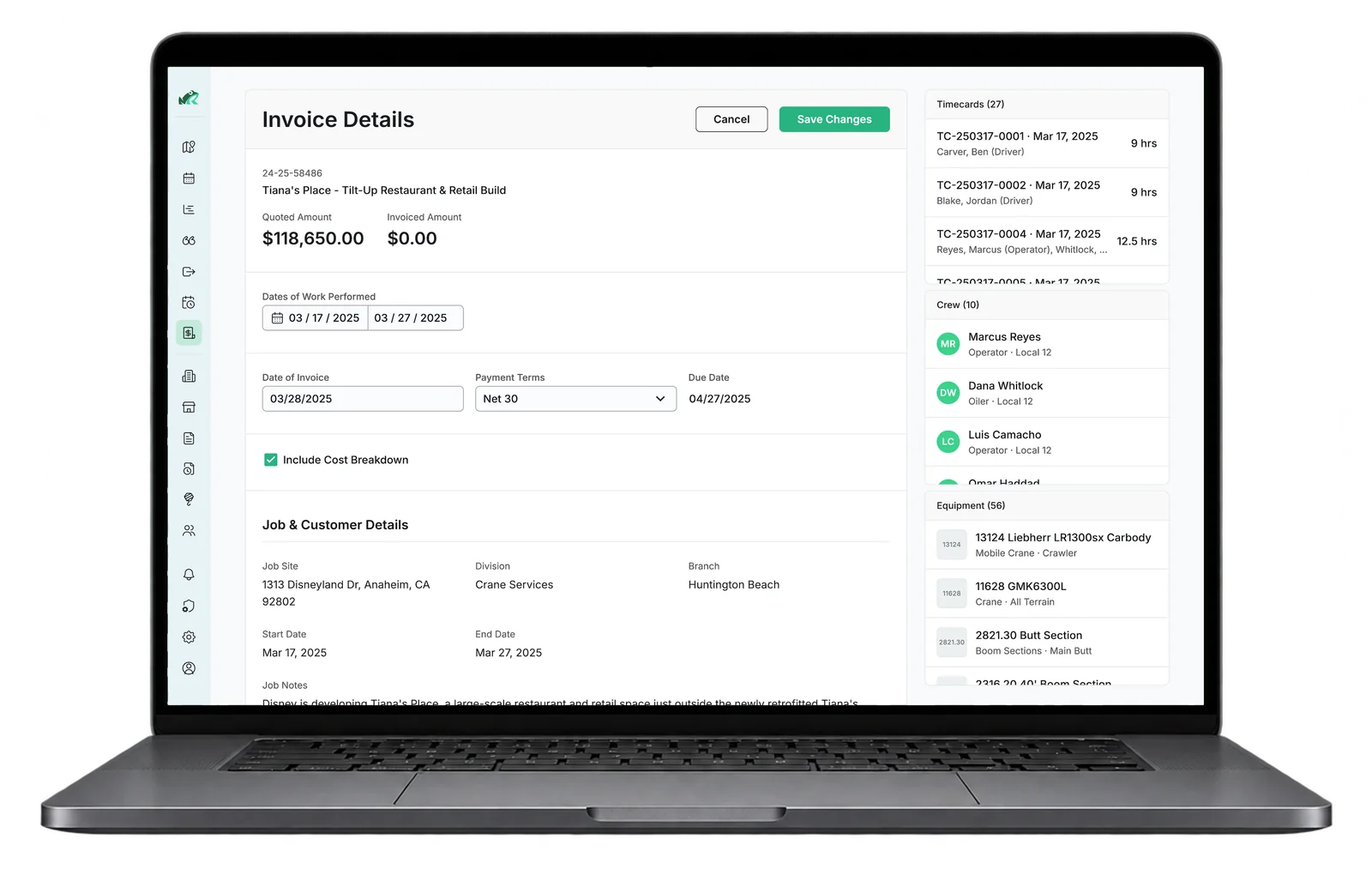
The invoice is drafted from the job on 03/28, the day after the work ended: the quote's $118,650.00, the dates of work, Net 30, and the 27 timecards behind it.
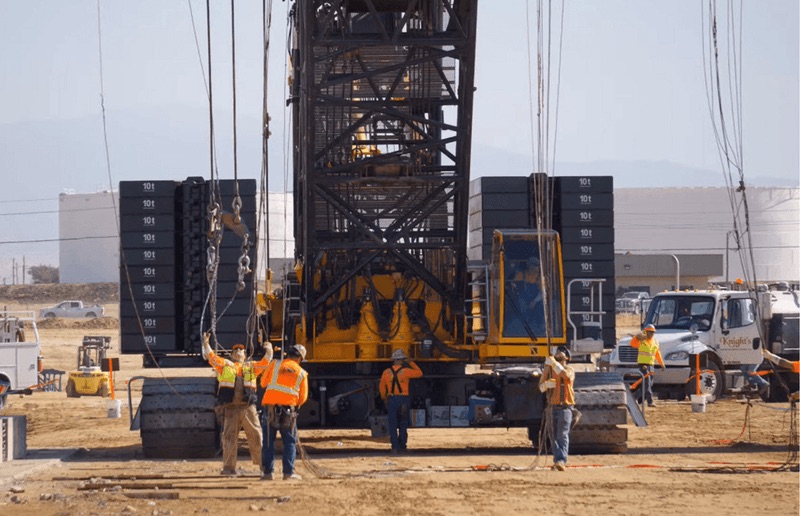
Tiana's Place, the example job
Every employee works in the platform, where the record lives. The modules are how you build the record, one workflow at a time.
The crew works from the plan dispatch built. The office sees what happened the day it happens.
Your crews work where there is no signal, so the app works there too. Forms, time entry, and job information stay available offline, and what they save syncs to the job record by itself when the signal returns.
Configurable timecards, inspections, job safety analyses, and authorizations, built to look like the forms your crews already know.
Put the stamped plan, the equipment's capacities, the inspection record, and the site notes on the job, so the crew sets up from the plan instead of from memory.
Tiana's Place, the example job
The mobile app
The back office benefits when the field trusts the system.


Apple and the Apple logo are trademarks of Apple Inc., registered in the U.S. and other countries. App Store is a service mark of Apple Inc. Google Play and the Google Play logo are trademarks of Google LLC.
Yes. Each person sees no more and no less than the job needs, on screens built for gloves, trucks, weather, and shift change, so the field picks it up on day one.
Yes. Every role, location, and trade fits through configuration, without new engineering, so a rollout runs branch by branch on the same record.
Yes. What the crew enters reaches the job record with or without signal, so the operation trusts the record and acts on it.
Because every extra app is one more thing to learn. The work order, the forms, the timecard, and the job's documents open in one place.
Through the job record. Notes, photos, forms, and signatures go onto it from the phone, so the office reads what happened without a call or a text thread.
Intel is Ribbiot's AI. It is native to the platform and trained against your operation's full record, which no operating system for these trades has done before.
Explore IntelIntel reads every field submission as it lands and flags what needs attention. An accepted quote becomes the plan automatically, and Intel adds planned resources for the crew and equipment the work requires. A person confirms every draft; Intel never writes the record.
One job passes four desks, and Intel has a first draft for each. Two are live today, one is in build, and one is coming soon. Try three of them on sample data on the Intel page.
Bring equipment location and tap-to-access documents into the same record as your people and jobs, so you stop renting gear you already own and the asset's certifications open at the equipment.
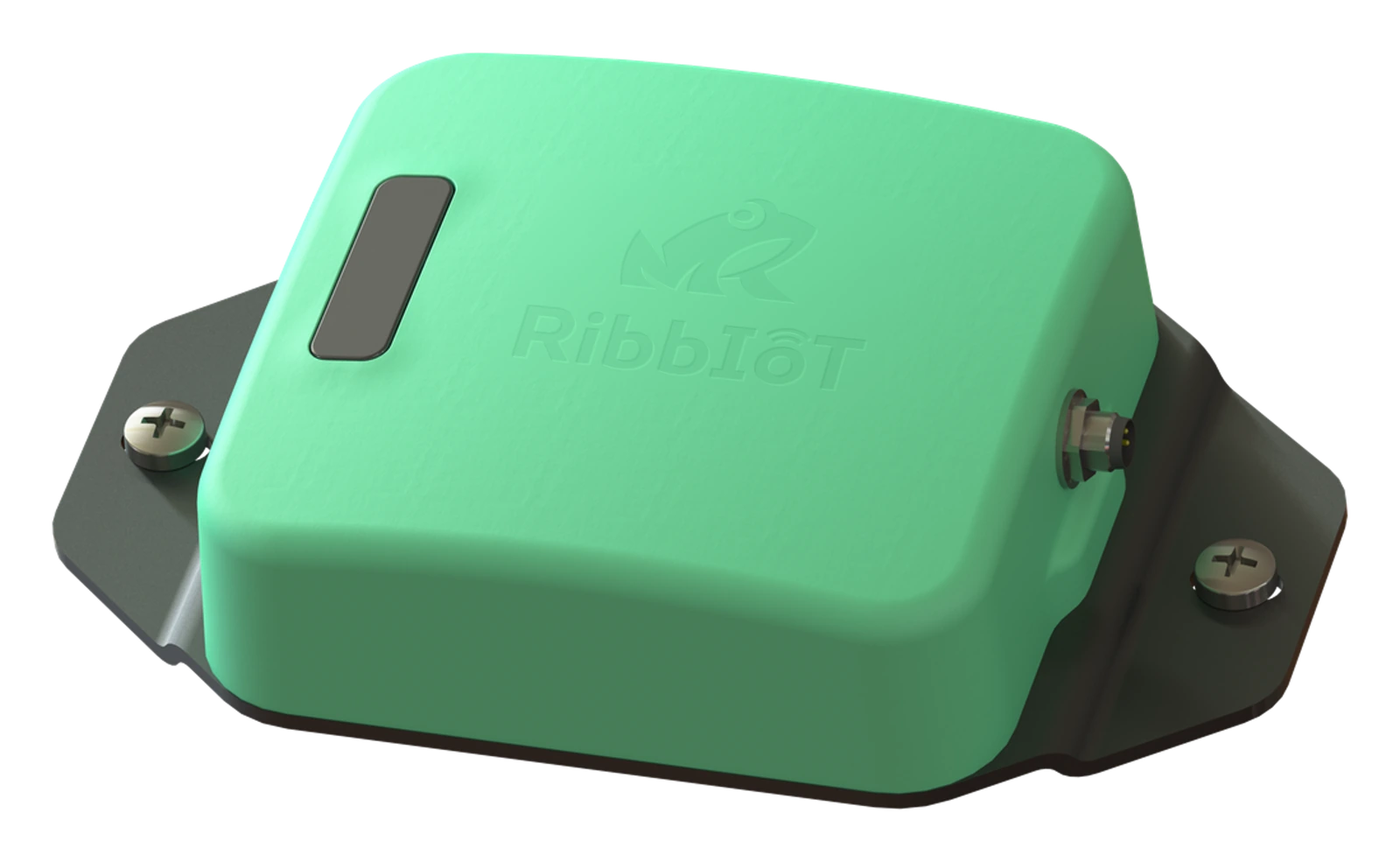
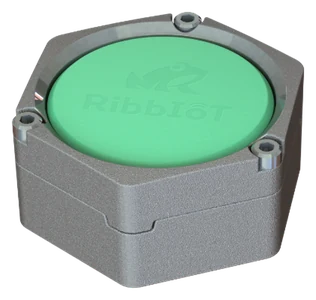
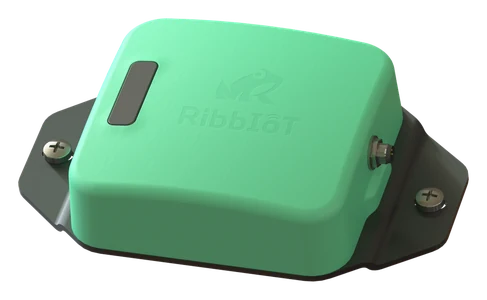
Satellite positioning (GPS) and cellular tracking for the machines, trucks, trailers, and forklifts that must report their own location, and a fixed hub for the yard. It reports its own location and relays nearby Pods.
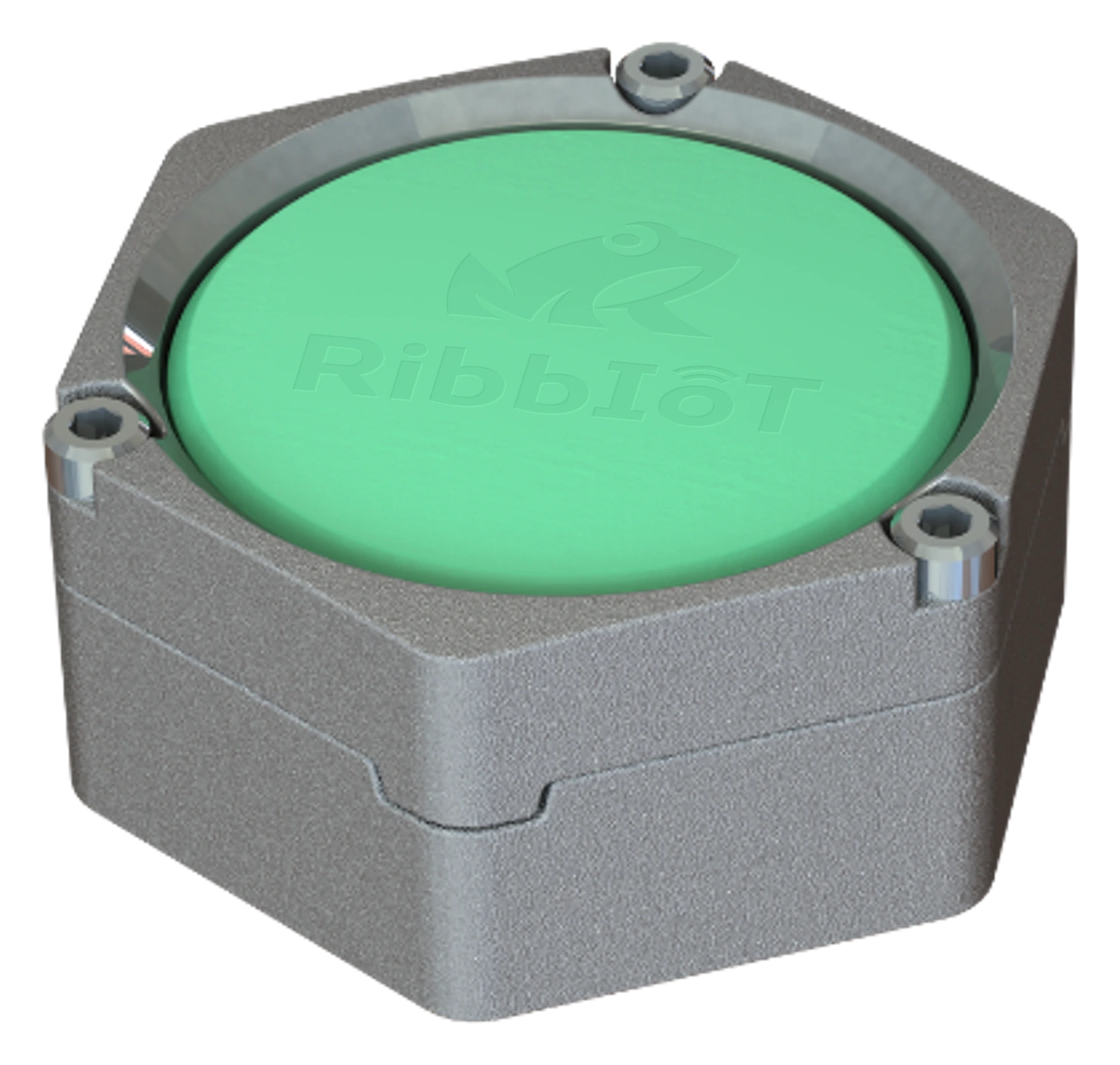
The compact industrial tracker for the support gear, tooling, and attachments that go missing first: a Bluetooth mesh, ultra-wideband finding, and a near-field communication (NFC) tap that opens the asset's record and certifications at the equipment. No GPS or cellular of its own, which keeps it small, sealed, and running about three years on one battery. Located through Portals and the mobile app.
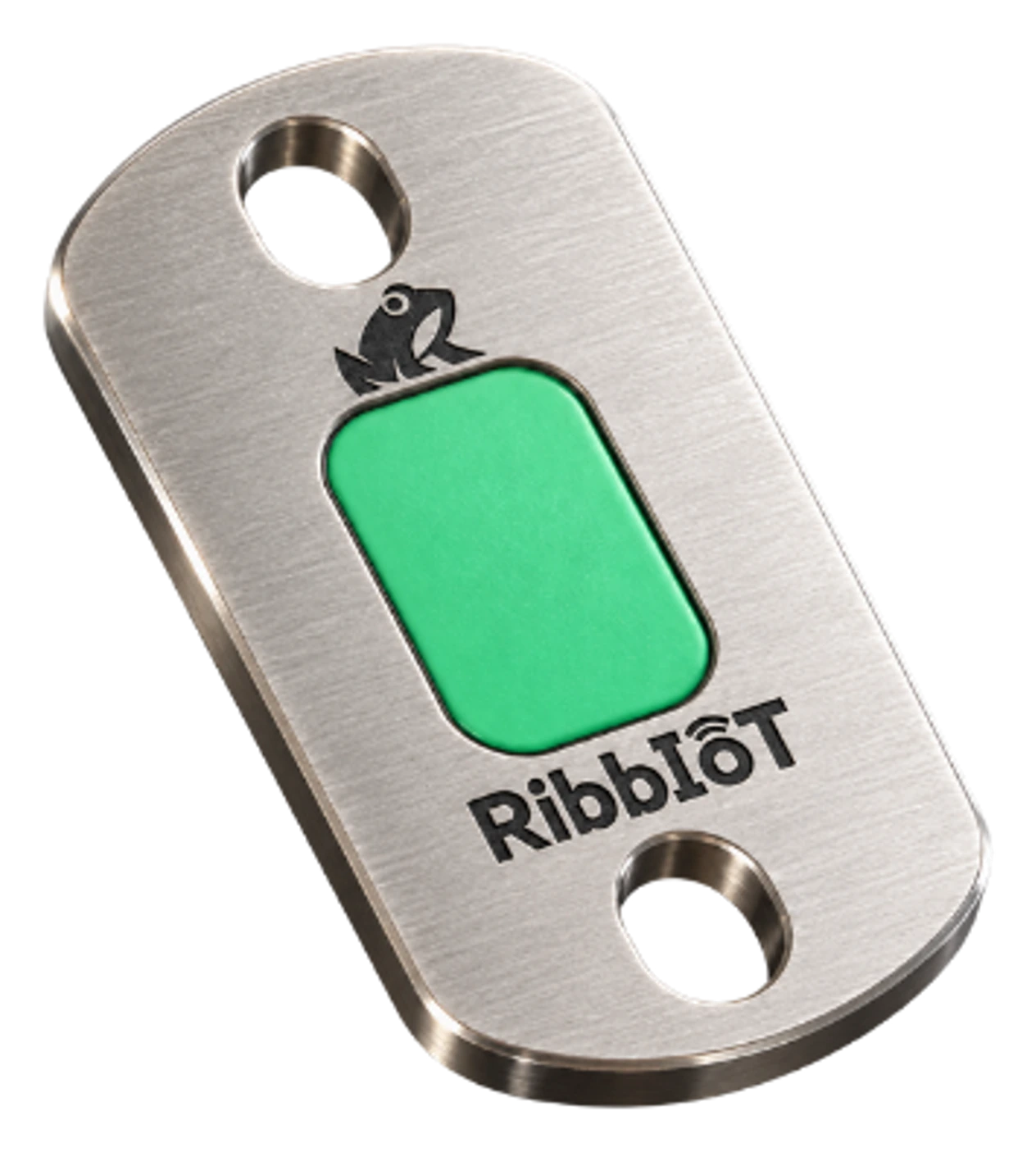
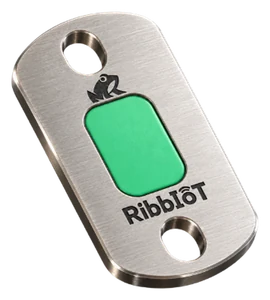
Rugged asset identity and document access. Tap it with a phone and the record, the documents, and the inspection forms open on the spot, and the tap saves the phone's location to the asset. It does not report its position between taps. In build.

Manage equipment with Ribbiot devices, existing telematics, or records alone.
Explore Track →Ribbiot runs the job and hands your accounting system the result, as invoice-ready records or through a direct connection where one exists; which connection applies to your systems is confirmed with you before the proposal. The telematics your fleet already carries feeds the same record, with other providers connected on request.
The Ribbiot API for connecting your own systems to the record is in build. First release proposed for December 2026.
Equipment-centric specialty trades, where every job is a new configuration of equipment, crew, certifications, permits, and site conditions and the record has to carry that configuration from the quote to the invoice. The companies that fit best feel several faces of the fog at once: equipment double-booked, rentals of gear they already own, jobs held at the gate for paperwork, tickets a week late, and billing that waits on them. If your work re-decides itself every time one variable moves, bring one job to the call, whether or not your trade has a page in the Trades menu; fit is weighed on how the work behaves, and a larger or smaller company is weighed the same way, never turned away on size.
No. Ribbiot runs the job from the quote to the invoice and hands your accounting system the result. Whether a direct connection exists for the accounting system you run is confirmed with you before the proposal, and billing works from the full story of the job before any accounting connection exists.
No. Run Ribbiot on Ribbiot's devices, on the telematics you already carry, or on no hardware at all. The record holds every asset you own, rent, or stage, tracked or not.
Yes. Start with the platform and one workflow: Capture for forms and timecards, Pursuit for quoting, or Command for scheduling. Track can come first too, priced per unit beside the software. Add the next workflow once the first is running on real jobs.
A full platform in one location typically takes about nine weeks, and a single workflow about four to five. The first phase always defines the outcomes you want and gets your equipment and people records ready. Value from a forms-first workflow typically shows within about a month of go-live.
The forms look like the ones your crews already fill out, opened on their phones against the job dispatch built. The time they enter goes to payroll review instead of back to the office on paper. The first workflow goes live in one location on real jobs, so you see adoption before you expand.
No. Secure validates the time before it reaches payroll, routes exceptions for review, and exports the coded time to the payroll system you already run. That system processes payroll as it does today.
Ribbiot catches it before the crew rolls. Command shows each asset's availability against every job on the board, so a double-booking shows at planning instead of at the gate. The dispatcher still makes the call when the work requires it.
Remove the Fog of Operations